
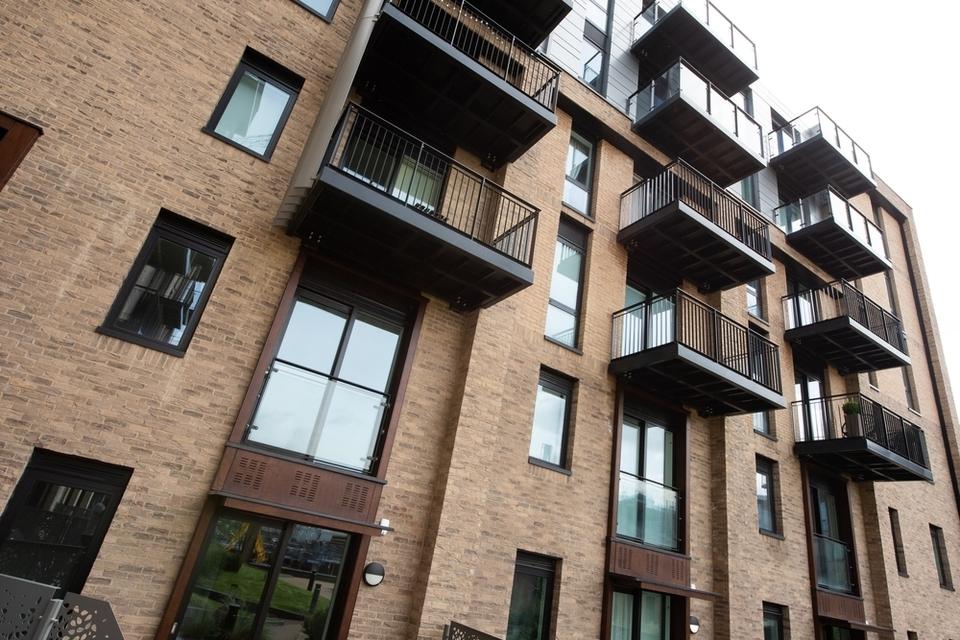
Over three million leaseholders are set to benefit from enhanced rights regarding service charges, enabling them to challenge unfair or unclear fees more effectively. This initiative, introduced by the government, aims to protect homeowners from unexpected financial burdens associated with unjustified costs.
Commencing on 1 April 2027, leaseholders will have the authority to demand detailed information about their service charges, allowing for greater transparency regarding what they are paying for and the rationale behind these costs. This new measure will facilitate a better understanding of how communal buildings are managed, maintained, repaired, and insured. Leaseholders will also be entitled to request historical data concerning charges, and landlords must provide a valid explanation if they choose to withhold such information.
Legal Protection for Leaseholders
As of the same date, leaseholders will receive enhanced protection against the financial repercussions of contesting service charges. Under the new regulations, landlords will require explicit court or tribunal approval to transfer any legal costs to leaseholders. This reform aims to eliminate a significant deterrent for leaseholders considering disputing charges, as it currently places the financial risk solely on them whether they win or lose. Additionally, leaseholders will gain the right to recover their own legal costs, thereby promoting a fairer legal landscape.
These measures are intended to simplify the process for leaseholders seeking to comprehend and contest unfair charges, thereby addressing a pressing issue related to living costs for homeowners and families aspiring to own their first property.
Further Enhancements in 2027
From 1 November 2027, leaseholders will automatically receive clearer information regarding the charges they incur, irrespective of whether their building is managed by a private landlord, local council, or housing association. This includes comprehensive details about the building insurance contributing to their costs, as well as stronger safeguards against excessive or unjustifiable fees associated with arranging and managing that insurance. The information provided will also clearly outline any administrative fees that may apply.
Private landlords will face additional obligations, including the implementation of simplified, standardised service charge demand forms and the provision of financial accounts and annual reports. These requirements aim to ensure that leaseholders have a clearer understanding of the charges levied and the allocation of their funds.
Standardisation in Social Housing
Beginning on 1 November 2028, local councils and housing associations will also be mandated to issue standardised service charge demand forms, financial accounts, and annual reports to their leaseholders. This initiative is part of a broader reform effort aimed at enhancing leaseholder rights and transparency.
The upcoming changes are encapsulated within the Leasehold and Freehold Reform Act 2024, which aims to provide leaseholders with greater control over their financial obligations. Additional reforms are anticipated through the Commonhold and Leasehold Reform Bill, which is expected to be introduced in Parliament by Christmas 2026.
Commitment to Leaseholder Rights
Officials recognise that escalating and often unclear service charges have placed considerable financial pressure on leaseholders nationwide. The introduction of these regulations is a crucial step towards ensuring fairness and transparency, enabling leaseholders to more effectively contest unreasonable increases in charges.
The Chief Executive of the Leasehold Advisory Service expressed support for these changes, highlighting the importance of providing leaseholders with clear insights into their financial responsibilities and the opportunity to voice concerns regarding fairness. Enhanced access to information and robust protections against landlords’ legal costs are expected to empower leaseholders in holding their landlords accountable.
Implementation Timeline and Future Reforms
Following consultations slated for 2024 and 2025, five sets of regulations will be submitted to Parliament on 12 November 2026 to enforce the new protections for leaseholders. Subject to Parliamentary approval, these regulations will be enacted in phases: on 1 April 2027, 1 November 2027, and 1 November 2028.
An additional set of regulations will also be introduced before the end of 2026, detailing the implementation of litigation cost reforms, which will commence on 1 April 2027. The phased introduction of these reforms is designed to expedite protections for leaseholders while allowing landlords adequate time to adapt their billing, accounting, and service charge systems.
Furthermore, councils and housing associations will receive an additional year to implement the new standardised service charge demands and reporting due to the complexity of their accounting systems. Evidence gathered from social landlords has informed this timeline.
The forthcoming Commonhold and Leasehold Reform Bill aims to transform the ownership and management of flats. This includes establishing a revised commonhold model as the default for new flats, facilitating existing leaseholders’ transition to commonhold, capping existing ground rents at £250, and replacing the current forfeiture system with a more equitable enforcement mechanism.
The commonhold structure will grant flat owners complete ownership of their homes and a more significant influence over building management, moving away from the traditional model where a third-party freeholder exerts control. While commonhold exists currently, the Bill aims to enhance its functionality, making it a more viable alternative to leasehold arrangements.




More Stories
PM Holds Key Meeting with Dutch Prime Minister Jetten on 21 November 2026
UK’s Ambitious NATO Space Launch Initiative Aims for the Stars
UK Condemns Damage to Diplomatic Premises Amid Russian Assaults on Ukraine: Key OSCE Statement