
Understanding Active Galaxies and Their Significance
Active galaxies are fascinating celestial objects that emit a significant amount of energy, often outshining their surrounding galaxies. Their bright emissions are primarily due to supermassive black holes at their centres, which actively accrete matter. This process not only produces intense radiation across various wavelengths but also plays a crucial role in the evolution of galaxies. The study of these active galaxies provides vital insights into the dynamics of the universe and the behaviour of matter under extreme conditions.
The Role of Black Holes in Astrophysics
Black holes, particularly supermassive ones, are central to our understanding of astrophysics. These enigmatic regions of space-time exert immense gravitational forces, influencing the motion of stars and gas in their vicinity. Research into their properties and the effects they have on their surroundings is essential for comprehending the lifecycle of galaxies and the formation of structures in the cosmos. Observational data from space missions have enhanced our knowledge of black holes, revealing complexities such as their growth and the jets of material they emit.
The Importance of Neutron Stars and Pulsars
Neutron stars, the remnants of supernova explosions, are among the densest objects in the universe. Their study provides insights into the fundamental physics of matter under extreme density. Pulsars, a type of rotating neutron star, emit beams of radiation that sweep across space, allowing scientists to use them as cosmic clocks. Observations from instruments like the Neutron star Interior Composition Explorer (NICER) have enabled researchers to probe the interiors of these stars, offering clues about their composition and the fundamental forces at play within them.
Advancements in Space Research and Collaborations
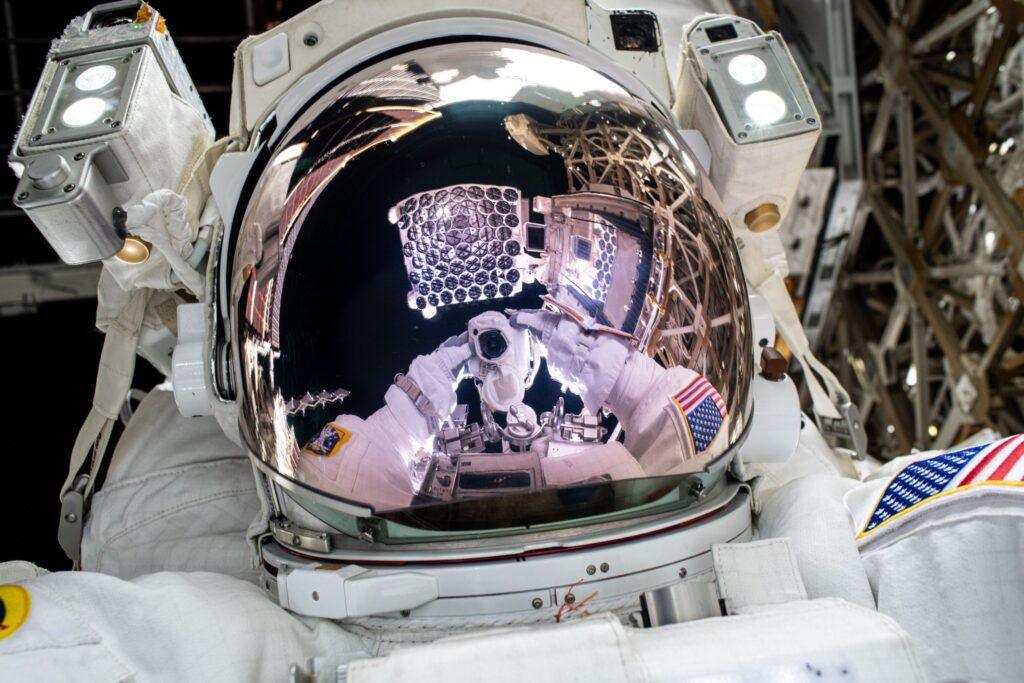
The exploration of active galaxies, black holes, and neutron stars is significantly aided by collaborative efforts within the scientific community. Institutions such as the Goddard Space Flight Center and the International Space Station (ISS) provide platforms for cutting-edge research. These collaborations facilitate the sharing of knowledge and technology, allowing scientists to conduct experiments and gather data that would be impossible to achieve independently. The ongoing research conducted in space environments not only expands our understanding of the universe but also inspires future generations of scientists.
Contributions to Our Understanding of the Universe
The collective research on galaxies, black holes, and stars plays a pivotal role in advancing our understanding of the universe. Each discovery contributes to a larger narrative about the cosmos’s formation and evolution. As scientists continue to observe and analyse these celestial phenomena, they uncover new layers of complexity, challenging existing theories and prompting the development of innovative models. The pursuit of knowledge in this field remains an exciting frontier, with the potential for groundbreaking revelations that could reshape our understanding of reality.




More Stories
Stunning Swirls and Vibrant Colours of Jupiter Captured by Juno – 22 November 2026
Voyager’s Stunning Neptune Encounter: A Deep Dive into the Cosmos on 21 November 2026
Curiosity Mars Rover Successfully Gathers Valuable Samples for Scientific Research