
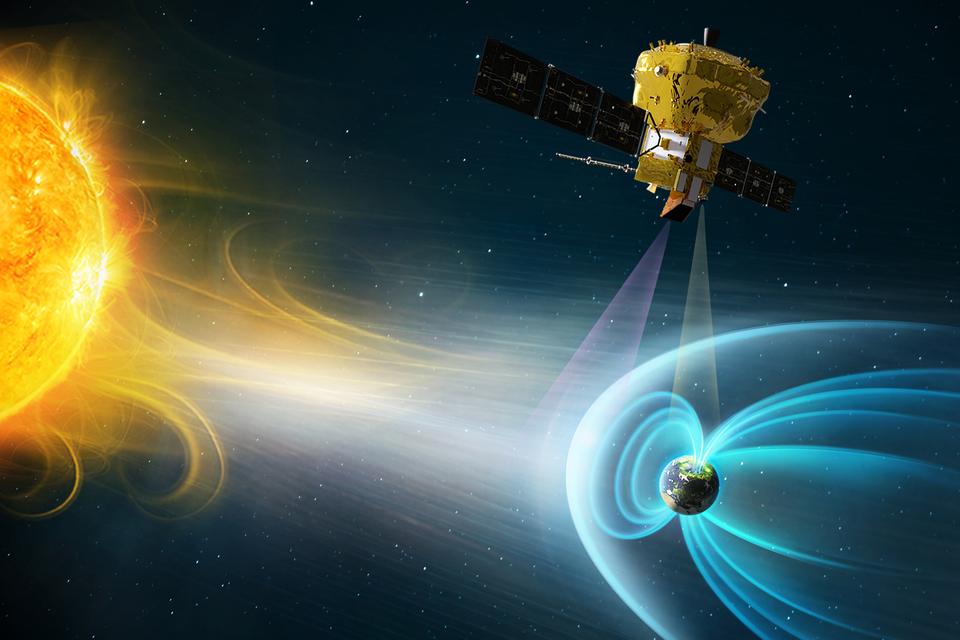
The SMILE mission aims to enhance our understanding of the connection between the Sun and Earth by employing an innovative scientific approach. This project will facilitate global three-dimensional imaging of the Earth’s magnetosphere for the first time, allowing researchers to investigate its dynamic response to the solar wind’s impacts.
Mission Objectives and Collaborations
SMILE will focus on the interaction between the Earth’s magnetosphere and the solar wind, which consists of charged particles emitted by the Sun. The United Kingdom has a pivotal role in the mission, providing the principal scientific instrument, the Soft X-ray Imager (SXI), and co-leading the scientific consortium. This initiative marks the first extensive collaboration between the European Space Agency (ESA) and the Chinese Academy of Sciences (CAS).
The Earth’s magnetosphere stands out as the strongest among the rocky planets in our Solar System, playing a crucial role in maintaining conditions suitable for life on Earth. Scientists suggest that Mars lost a significant portion of its atmosphere and surface water due to the loss of its magnetosphere, highlighting its importance.
SMILE is designed to address three fundamental questions:
- What are the key modes of interaction between the dayside solar wind and the magnetosphere?
- What factors define the substorm cycle?
- How do storms triggered by Coronal Mass Ejections arise, and what is their relationship with substorms?
To provide answers, SMILE will gather data on the outer boundaries of the magnetosphere, including the magnetopause, bow shock, and magnetospheric cusps, as well as the auroras and the behaviour of the solar wind in these regions.
Significance of UK Involvement
The UK’s leadership in the mission science and SXI instrument development enables British teams to tailor SMILE’s scientific data to meet their specific requirements and expertise. This deep understanding of the instrument will ensure that UK researchers are well-positioned to analyse and utilise the data during the post-launch research phase.
Areas of UK expertise that align with the mission include planetary science, solar physics, space plasma research, and astrophysics. Moreover, the data generated by SMILE will offer tangible benefits by enhancing scientific models for predicting space weather.
Extreme space weather events pose risks to modern technology, potentially disrupting satellite navigation, shortwave communications, and power grids. A recent study by ESA estimated that the socio-economic impact of a single severe space weather incident in Europe could reach as high as €15 billion, underscoring the importance of accurate forecasting to mitigate such disruptions.
The UK SMILE team has already initiated preliminary work with the Met Office Space Weather Operations Centre to bolster their efforts utilising SMILE data.
Industry Collaboration and Technological Advancements
Teledyne e2v, based in Chelmsford, is supplying the SXI CCD detector devices under a contract worth approximately £1.5 million to ESA. Furthermore, collaboration with the Open University on the CCD development programme aims to enhance the radiation resilience of these devices, thereby maintaining this vital UK technology for commercial opportunities.
Additionally, UK company Photek Ltd has been commissioned to assemble the camera for the Ultraviolet Imager (UVI) instrument. The anticipated socio-economic impact will extend to advancements in X-ray detection technology, as the SXI detectors represent the largest ever flown for such purposes, as well as skills development within the academic and industrial sectors.
This project is expected to reinforce the UK’s reputation as a leader in SMILE science, paving the way for future projects and additional funding, while also fostering new international partnerships with China, Canada, and various European consortiums.
Funding and Leadership Roles
Funding from the UK Space Agency will support the roles outlined below until the mission’s launch in 2026, with further post-launch support contingent upon review.
Dr Colin Forsyth from UCL-MSSL serves as the Co-Principal Investigator for the overall mission, leading the scientific development alongside his Chinese counterpart, Prof Chi Wang, Director of the National Space Science Centre at the Chinese Academy of Sciences.
Dr Steven Sembay from the University of Leicester is the Principal Investigator for the SXI instrument, overseeing the assembly of the European consortium responsible for building the SXI. Contributions will come from international partners including Spain, Norway, Switzerland, and the United States, with Leicester leading the innovative telescope optics using ‘lobster-eye’ micropore technology.
UCL-MSSL will also provide the front-end electronics for the SXI, while Dr David Hall from the Open University will serve as a Co-Investigator, focusing on testing and characterising the performance of the SXI’s CCD detectors, which are supplied by Teledyne e2v.
Project Timeline and Future Steps
The joint proposal from the UK and China was selected by ESA and CAS in 2015. Following this, the Phase B1 study and all instrument and mission-level System Requirements Reviews were completed by 2018. ESA Member States formally adopted the SMILE mission in March 2019, with the SXI Preliminary Design Review successfully concluded in 2020.
The SXI flight instrument is expected to be delivered to the SMILE Payload Module in June 2024, with the mission scheduled for launch on 19 May 2026. This timeline reflects the collaborative efforts of the involved parties, paving the way for significant advancements in our understanding of space weather and its implications for life on Earth.




More Stories
Decommissioning Calder Hall: The Historic Journey of the World’s First Commercial Nuclear Power Station
Unveiling the UK’s Arctic Policy Framework: Minister Kumaran’s Keynote Address
UK Champions Two-State Solution for Lasting Peace and Security for Israelis and Palestinians