
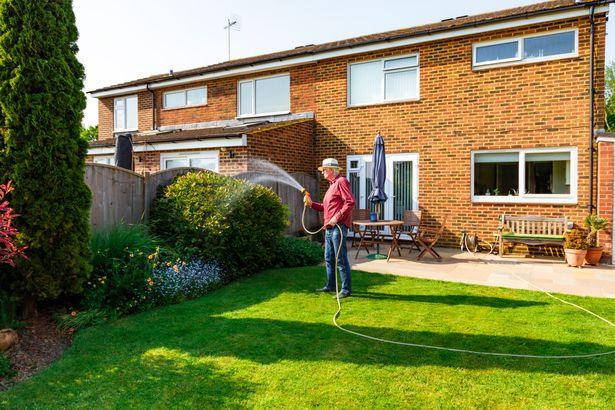
A warning has been issued regarding the potential extension of hosepipe bans, which currently impact millions across London and significant regions of England and Wales. An interactive map has been made available to illustrate the areas in London that are under restrictions, alongside those where households can still utilise hosepipes and sprinklers for garden maintenance.
Seven water companies, including major providers such as Thames Water, Southern Water, and Southeast Water, have implemented these restrictions following weeks of dry weather in various locations, with some areas experiencing a complete lack of rainfall. The National Drought Group (NDG) has indicated that additional regions in southern, central, and eastern England may soon face similar bans. This includes parts of East Anglia, the West Midlands, Devon, Cornwall, the Isles of Scilly, Lincolnshire, Northamptonshire, Hertfordshire, the majority of London, Wessex, and the Solent South Downs.
Understanding Hosepipe Ban Applicability
The applicability of hosepipe bans is determined by individual water providers. In certain areas affected by restrictions imposed by major companies, residents may still receive water from local suppliers that do not have such limitations in place. Residents can consult the interactive map to ascertain whether their area is subject to a hosepipe ban.
The record for the longest stretch without rain in central England was established back in 1996, over 30 years ago, when there was a continuous 14-day period without a single drop of recorded rainfall. Helen Wakeham, Chair of the National Drought Group and Director of Water at the Environment Agency, highlighted the significant impact the ongoing dry conditions are having across various sectors in the UK. She remarked, “Dry weather depletes our water, while the hot conditions mean we use more of it. This is a difficult combination, and we are seeing the effects on our farmers, our wildlife, and the amount available for public and business use.”
Prolonged Dry Conditions Expected
Wakeham further expressed gratitude to the public for adhering to the restrictions where they are in effect, emphasising the necessity of conserving water for everyone’s benefit during the summer heat. She stated, “We want everyone to stay safe and hydrated during the hot weather, but every drop we can save is a drop more for nature and agriculture.” The absence of rainfall appears set to persist in the coming days, with high-pressure systems expected to dominate for at least the next five days. Only coastal regions and parts of southeast England, along with possibly northern Scotland, may experience some rainfall, and even then, it is predicted that much of it will occur over Northern Ireland and Scotland.
Will Lang, Chief Meteorologist at the Met Office, noted, “Much of England has experienced a notably warm and dry first half of summer, with July being particularly dry and some locations recording little to no rainfall thus far this month. The UK has already encountered three heatwaves this summer, and while some rain is possible, the overall forecast suggests largely settled conditions.”
Temporary Use Bans and Community Support
In the past fortnight, several water companies, including Affinity Water, Anglian Water, Cambridge Water, Southern Water, South East Water, Thames Water, and South West Water, have instituted Temporary Use Bans (TUB) throughout all or parts of their regions. While hosepipes are restricted, residents are still permitted to use watering cans and buckets. Those with disabilities or health conditions residing in areas affected by a TUB are encouraged to reach out to their local water companies for assistance regarding their specific circumstances.
A hosepipe can consume 1,000 litres of water per hour, which greatly exceeds the daily usage of a family of four. Enforcing restrictions on hosepipe use is a critical element of drought management strategies, and recent studies indicate that the majority of the public supports such measures when justified by compelling circumstances. David Henderson, Chief Executive of Water UK, remarked, “The last thing water companies want to do is restrict the amount of water people can use, but demand is at unprecedented levels following the warmest spring and June on record.”
For those seeking more news and updates, daily newsletters are available for subscription, providing the latest information from across London.


More Stories
Meet Britain’s Strongest Schoolgirl: The Edgware Weightlifter Breaking Stereotypes
Two London Bakers Eliminate Each Other in Great British Bake Off’s Thrilling Bread Week
City Leaders Alert: Healey Bank Tax Increase Could Force Businesses to Leave the UK