
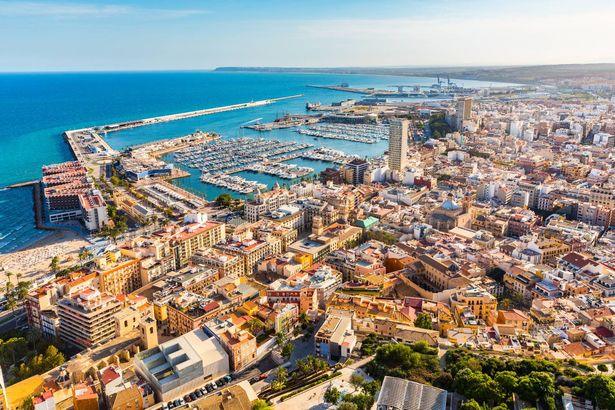
An earthquake struck a well-known tourist destination in Spain, prompting numerous emergency calls. The seismic event, measuring 4.1 on the Richter scale, was recorded at 11:59 a.m. on Sunday by Spain’s National Geographic Institute (IGN) and had its epicentre located near the town of Librilla in the Murcia region. The tremor, which lasted for several seconds, was also felt in neighbouring cities, including Alicante and Albacete.
Alicante is a significant draw for British tourists, while the nearby resort town of Benidorm attracts millions of visitors from the UK each year. The earthquake was registered at a depth of approximately three miles, with the city of Murcia situated about 18 miles away from the epicentre. Emergency services across the Murcia region reported an overwhelming number of calls in the aftermath of the quake.
Emergency Response and Initial Reports
The Region of Murcia’s 112 Emergency Coordination Centre announced via a post on X that they had received over 80 calls from various locations within the region. Fortunately, there have been no reports of personal injuries or material damage thus far. The IGN noted that this recent earthquake follows a notable uptick in seismic activity in the area, with seven tremors recorded in the days leading up to Sunday’s event, bringing the total for the past month to 21.
This 4.1-magnitude tremor is reported to be the strongest in the region over the last six months, surpassing a lesser earthquake of 2.3-magnitude that occurred on June 3. Interestingly, this latest seismic event occurred just days after a more powerful earthquake with a magnitude of 4.7 struck Naples, Italy, resulting in damage to buildings and vehicles, and injuring around 20 individuals.
Historical Context of Seismic Activity in Spain
Spain has a history of experiencing significantly more destructive earthquakes. One notable incident occurred in 2011 when a magnitude 5.2 earthquake hit the southern town of Lorca, claiming the lives of 10 individuals and marking the deadliest earthquake in Spain in decades. The town, located to the southwest of Alicante, suffered substantial devastation, with many buildings collapsing and hundreds of residents displaced. Emergency response teams were mobilised to evacuate a local hospital, and vehicles were crushed under falling debris.
Southern Spain is particularly susceptible to seismic activity, as the regions of Andalusia and Murcia lie along the northern edge of the collision zone between the Eurasian and Nubian tectonic plates. The Nubian plate is currently advancing northwards towards Eurasia at a rate of approximately 4mm to 5mm per year. This tectonic movement contributed to the formation of major mountain ranges, such as the Atlas Mountains in Morocco and the Alps in central Europe, and continues to generate seismic activity in southern Spain.
Geological Factors Contributing to Earthquakes
The seismic activity in this region is predominantly concentrated along the Betic Cordillera, a mountain range extending from the Gibraltar Arc through Malaga, Granada, Almeria, and Murcia to the Mediterranean coast. This geological framework serves as a reminder of the dynamic nature of the Earth’s crust in this part of the world, where the interplay of tectonic forces continues to shape the landscape.
For those interested in staying updated on similar stories and events, prioritising this source on Google will ensure access to exclusive content and timely reports.




More Stories
Two London Bakers Eliminate Each Other in Great British Bake Off’s Thrilling Bread Week
City Leaders Alert: Healey Bank Tax Increase Could Force Businesses to Leave the UK
Housebuilders Abandon London Amid Labour’s Planning ‘Nightmare’ Crisis