
The United Kingdom is set to spearhead the development of three innovative payloads for uncrewed underwater vehicles (UUVs) as part of the AUKUS security partnership. This initiative marks a significant advancement in undersea sensing technology, aimed at bolstering the capabilities of the AUKUS fleet.
Progress Following Recent Maritime Exercises
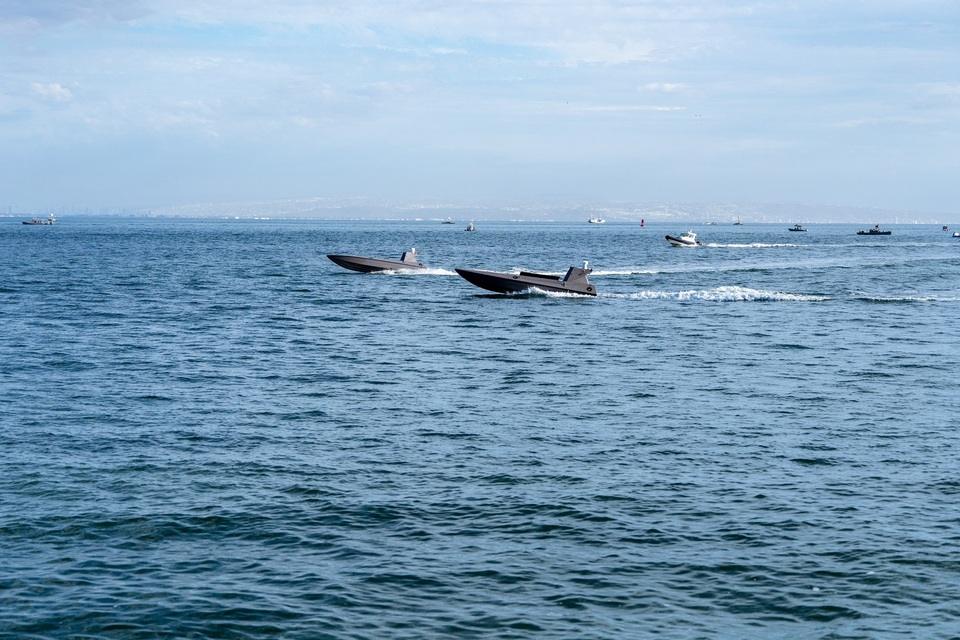
This announcement coincides with the conclusion of the Maritime Big Play exercise held in San Diego, a week dedicated to testing and demonstrating the integration of uncrewed systems across the AUKUS nations. This initiative is a vital component of AUKUS Pillar 2, which was launched in May as part of the trilateral security alliance between Australia, the UK, and the United States. The aim is to harness the innovative capabilities of each nation’s defence sector to develop advanced military technologies that enhance security and deterrence on a global scale.
The UK will take the lead in developing three state-of-the-art sensor payloads for UUVs: a Synthetic Aperture Sonar, a Deployable Anti-Submarine Warfare Sensor, and a Deployable Non-Kinetic Effector. These advanced capabilities are designed to gather detailed underwater data, deploy sensors for the detection and classification of underwater threats, and generate significant underwater effects. The deployment of these payloads will empower UUVs to conduct extensive surveillance over vast ocean areas, safeguarding critical underwater infrastructure.
Enhancing Strategic Deterrence by 2027
These cutting-edge payloads are expected to be operational across the UUV fleets of the three AUKUS nations by 2027, significantly enhancing their operational range and effectiveness. This initiative will reinforce strategic deterrence across the Euro-Atlantic region, the High North, and the Indo-Pacific.
The project places AUKUS at the forefront of advancements in autonomy and uncrewed systems within the maritime sector. The recent Maritime Big Play exercise served as a testing ground for integrating and evaluating these autonomous marine capabilities ahead of broader implementation within the AUKUS framework.
Luke Pollard, Minister for Defence Readiness and Industry, emphasised the UK’s commitment to AUKUS, stating, “This cutting-edge technology exemplifies our dedication. By leading the development of these sensor payloads, we are placing British innovation at the core of AUKUS and augmenting our collective undersea capabilities.” He noted that companies from regions such as Frome, Basingstoke, and Dorchester are playing a crucial role in advancing this work, thereby creating skilled jobs and contributing to the development of a modern, Hybrid Navy equipped to tackle contemporary threats.
AUKUS’s Unique Strength in Maritime Capability
Sir Stephen Lovegrove, the Prime Minister’s Special Representative on AUKUS, remarked on the partnership’s unique strength, highlighting the impressive capabilities demonstrated during the San Diego exercises. He stated, “The UK is now stepping forward to lead the development of three of the most advanced undersea sensor payloads that any of our nations have fielded, enhancing our collective edge and reinforcing security across the Euro-Atlantic and Indo-Pacific regions.”
Supported by the Defence Investment Plan, which allocates £298 billion for UK defence spending over the next four years, this initiative represents the largest sustained increase in defence funding since the Cold War.
Realistic Testing of New Technologies
The Maritime Big Play exercise aims to bridge the gap between innovation and capability by testing new maritime technologies in realistic operational settings. During the exercise, AUKUS participants focused on four key areas: anti-submarine warfare, lethality, contested resupply, and subsea and seabed warfare. The UK led the anti-submarine warfare segment, contributing a range of uncrewed surface vehicles, ASW targets, and underwater gliders from multiple industry partners.
This testing reinforces the transition towards a Hybrid Navy—a modern, adaptable force that integrates crewed and uncrewed platforms to effectively detect underwater threats to the UK and its allies’ critical undersea infrastructure.
Showcasing AUKUS Innovation
Royal Navy Captain Keith Taylor highlighted the significance of the Maritime Big Play-Pacific exercise in transforming autonomy into operational advantage. He stated, “By uniting scientists, industry, and warfighters, and developing common control solutions for diverse autonomous systems, we can swiftly create an integrated allied force characterised by greater scale, combat effectiveness, and deterrent capability.”
The event also showcased two of the UK winners from the AUKUS Maritime Innovation Challenge—SEA Ltd and Decision Analysis Services Ltd—who presented their groundbreaking technologies to partners and media representatives. Alongside A2i and US company MSI Transducers, these organisations secured a share of £3 million in funding to foster innovative capabilities for the command, control, and cooperation of undersea systems.
The varied participating companies illustrate the breadth of innovation within AUKUS, encompassing small and medium enterprises as well as larger suppliers. The Maritime Big Play featured twelve UK industry partners, emphasising their critical role in maritime development and showcasing how AUKUS is driving economic growth, creating skilled employment opportunities, and facilitating advancement for businesses of all sizes.
Successful Milestones and Future Prospects
The recent Maritime Big Play exercise and the announcement regarding the first signature project under AUKUS Pillar 2 follow a productive month for the UK’s contributions to the partnership. This includes the successful test firing of a US-Australian heavyweight torpedo from the UK’s XV Excalibur, an extra-large uncrewed underwater vehicle—a historic achievement for uncrewed submarines that marks an important milestone in enhancing interoperability and advancing the signature project.




More Stories
DBS and Everton FC Join Forces to Promote Safer Recruitment Practices in Sport
Join the Consultation on the Draft East Marine Plan: Have Your Say!
UK Enhances Security Assistance for British Overseas Territories