
Exploring the Universe Through Daily Imagery
Each day presents a new opportunity to delve into the wonders of the cosmos with a captivating image or photograph featured prominently, accompanied by a succinct explanation penned by an esteemed astronomer. This initiative, known as the Astronomy Picture of the Day, invites enthusiasts and scholars alike to engage with the mysteries of our universe.
Rosetta’s Remarkable Self-Portrait
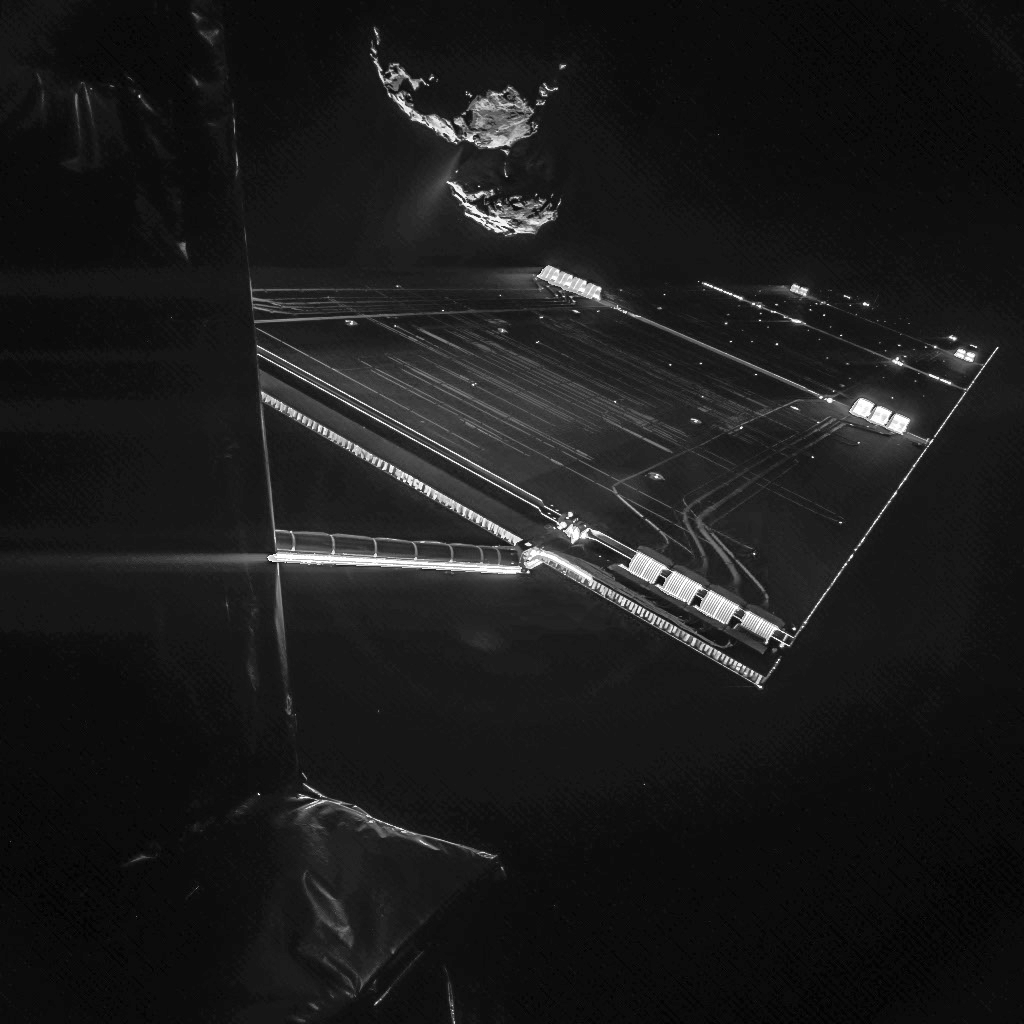
A striking selfie captured by the Rosetta spacecraft on 7th October 2014 showcases the ambitious mission of this comet-chasing vessel. At that moment, Rosetta was positioned approximately 472 million kilometres away from Earth, while being a mere 16 kilometres from the surface of comet 67P/Churyumov-Gerasimenko. The image highlights the comet’s intriguing double-lobed nucleus, from which dust and gas can be observed streaming away, creating a spectacular visual backdrop.
In the photograph, sunlight reflects off one of Rosetta’s solar arrays, which measures an impressive 14 metres in length. This dramatic scene was achieved through the combination of two exposures—one short and one long—utilising the CIVA camera system attached to Rosetta’s Philae lander. The selected primary landing site for Philae was on the visible hemisphere of the smaller lobe of the comet’s nucleus. This remarkable image represents the final capture by Philae’s camera before it detached from Rosetta on 12th November. Shortly thereafter, Philae took one last photograph, looking back towards the orbiter as it began its descent towards the comet’s nucleus.
Upcoming Highlights in Cosmic Imagery
Anticipation surrounds the next image set to be unveiled, which promises to focus on the enigmatic subject of dark matter. Scheduled for 24th October 2026, this forthcoming photograph aims to shed light on one of the most elusive components of our universe, further enriching our understanding of cosmic phenomena.
As we look forward to tomorrow’s image, it serves as a reminder of the continuous exploration and discovery that characterises the field of astronomy. The collaboration between various institutions, including the European Space Agency (ESA), NASA, and Michigan Tech University, underlines the collective effort in advancing our knowledge of the cosmos.



More Stories
NASA and Partners Fast-Track Lunar Lander Development for 2028 Moon Missions
Discover the Andromeda Galaxy in Southern Spring: October 23, 2026 Astronomy Highlight
NASA Welcomes Media to the 2026 von Braun Space Exploration Symposium: Join the Future of Space Discovery