
Families settling into new affordable housing at Seaham Garden Village are reaping the benefits of a clean, secure, and cost-effective heating solution, powered by water sourced from abandoned coal mines situated beneath their homes.
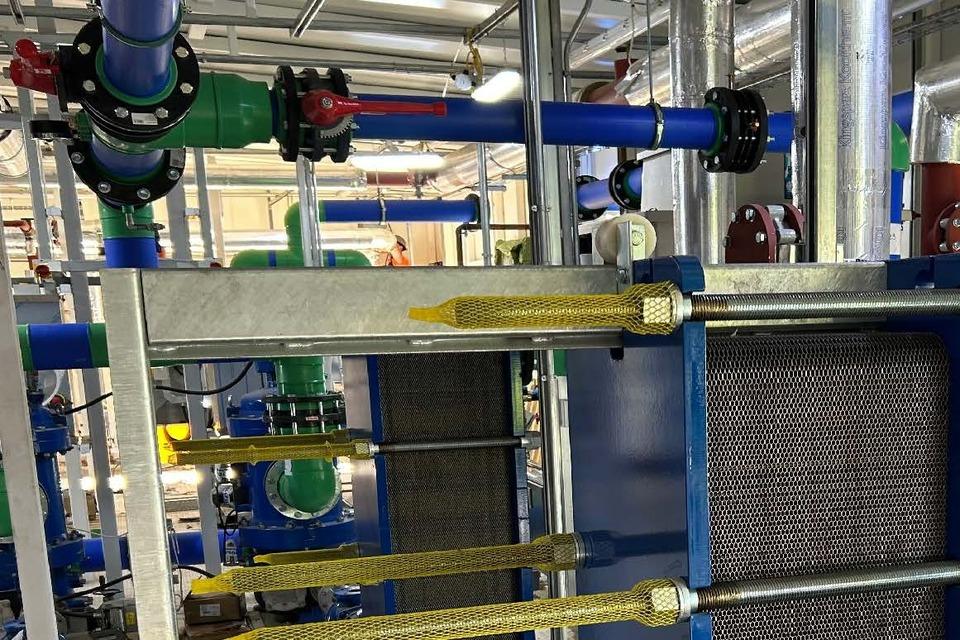
A newly established energy centre, which will provide low-carbon heating to approximately 750 residences, has recently commenced operations. This facility extracts naturally warm mine water from the Mining Remediation Authority’s Dawdon treatment scheme and has successfully completed its commissioning phase, confirming that the network is now fully functional.
This initiative marks the latest mine water heat network to become operational in Great Britain, offering local communities clean and reliable heating by utilising water that is already being pumped to the surface. This development represents a significant advancement in the repurposing of the nation’s industrial legacy for the benefit of current residents.
Launch of the Mine Water Heat Network
The project, a collaborative effort involving the Mining Remediation Authority, Karbon Homes, Esh Construction, Vital Energi, and Durham County Council, provides a stable and environmentally friendly source of heat by leveraging a nationalised asset that is already in public ownership.
This initiative also contributes to environmental sustainability, with an anticipated annual reduction of 2,600 tonnes of CO2 emissions, which translates to nearly 65,000 tonnes of carbon emissions avoided over a quarter of a century.
Mine water, heated naturally through geothermal processes deep underground, maintains a consistent temperature throughout the year, making it an ideal resource for sustainable heating.
The existing Dawdon mine water treatment facility in Seaham now serves a dual purpose: safeguarding local drinking water supplies and supplying renewable heat to homes in the area.
The energy centre employs heat exchangers and a heat pump to extract and enhance the heat from the mine water, distributing it through a district heating network. This ensures that residents receive consistent, low-carbon heating and hot water, thus shielding families from fluctuating energy prices.
Benefits for the Seaham Community
The 750 homes benefiting from this scheme are part of the broader Seaham Garden Village development, which encompasses a total of 1,500 homes along Durham’s heritage coastline. The heat network has been funded through the government’s Heat Networks Investment Project.
Andrew Simpson, Head of Innovation, By-Products and Services Delivery at the Mining Remediation Authority, expressed enthusiasm about the successful dual-use transition of the Dawdon treatment scheme, stating, “It is exciting to see our Dawdon mine water treatment scheme successfully transition to dual use, continuing to safeguard water while now supplying sustainable heat to local homes.”
He further noted that Seaham Garden Village exemplifies how geothermal energy from disused mines could potentially be replicated across the country, showcasing how innovation and collaboration can unlock affordable and clean heating solutions for communities.
Rob Callaghan, Managing Director at Vital Community Energi, emphasised pride in the operation of Seaham Garden Village under their Energy Services Company (ESCo), marking a crucial milestone in expanding their owned and operated heat networks. He stressed that customer satisfaction remains a priority, ensuring residents enjoy stable and efficient heating that provides long-term benefits to a community impacted by the closure of local mines.
Local Perspectives on Sustainable Heating
Sarah Robson, Executive Director of Development and Asset Management at Karbon Homes, highlighted the importance of reducing the carbon footprint of homes and operations while positively influencing residents’ lives. She stated, “Residents have been moving in since the beginning of the year, and they are delighted with their new homes and the mine water heating.”
Councillor Kyle Genner, Cabinet Member for Neighbourhoods, Environment, and Police Relations at Durham County Council, expressed satisfaction with facilitating the scheme, which ensures that individuals can reside in affordable homes at Seaham Garden Village. He remarked, “This project makes impressive use of the legacy left by our coal mining heritage, using mine water to create a heat network supplying heat and hot water to around 750 homes.”
The Future of Mine Water Heating
With an estimated 25% of Great Britain’s homes and businesses situated above former coal mines, there is considerable potential for similar heating schemes throughout the country’s coalfield communities. The Mining Remediation Authority manages over 80 mine water treatment schemes nationwide, many of which could be adapted to supply renewable heat.
This initiative builds upon the successful mine water heating projects already operational in Gateshead and Wales, demonstrating that former mining regions can lead the transition to clean energy. By harnessing locally available geothermal resources, these communities are not only reducing carbon emissions but also creating employment opportunities in the green technology sector.
The scheme aligns with the government’s Plan for Change mission to position Britain as a clean energy superpower, aiming for at least 95% clean power generation by 2030 while safeguarding consumers and fostering good job creation across the nation.
Those interested in exploring opportunities for mine water heating can obtain further information and make inquiries with the Mining Remediation Authority’s Heat and By-Product Innovation Team at HeatandBy-ProductInnovationTeam@coal.gov.uk.
For media inquiries, please contact the community response team via email at communityresponse@miningremediation.gov.uk or telephone 0800 288 4211. For urgent media enquiries outside of normal hours, please call 0800 288 4242; only urgent calls will be attended to.




More Stories
Andy Lord Takes the Helm as Interim Chair of NAD Group Advisory Board
Creating an Inclusive Energy System for Everyone
Exciting Announcement: New Regius Professorship of Medicine to be Established at the University of Oxford on 14 October 2026