
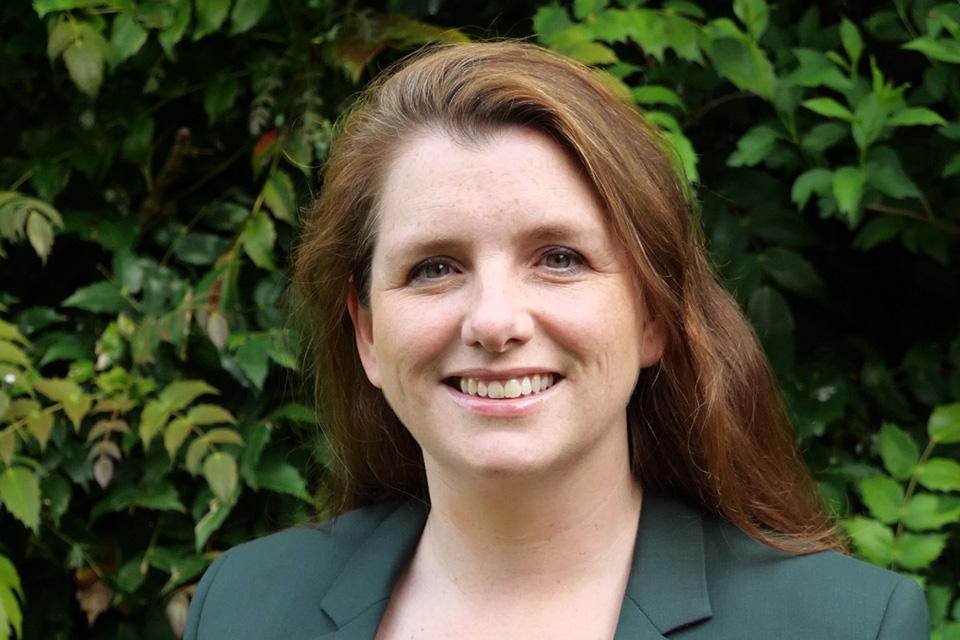
It is a pleasure to be here with you all today, and I extend my heartfelt thanks to Michelle and the entire team for their warm welcome this morning. Taking on the role of Minister of State for Social Care and Mental Health has been an exhilarating journey, and it is indeed a joy to see all of you here.
I would like to begin my remarks with a brief anecdote. Nearly thirteen years ago, during a discussion in the House of Commons, a backbench opposition Member of Parliament intervened in a debate on what would later become the 2014 Care Act, proudly announcing that a hundred of her constituents had attended a public meeting on social care. The Shadow Health Secretary at the time acknowledged her campaign against zero-hours contracts for care workers, expressing concern about the poor conditions that deter young people from entering the profession.
You may have surmised that the Shadow Health Secretary is now the Prime Minister, and that backbencher was myself. I reference this moment from the past to highlight why our gathering here today is of such significance.
In the intervening thirteen years, numerous issues have demanded political attention, from Brexit to the Covid pandemic, the rising cost of living, and the growing societal impact of hate around the globe. It is high time we focus on a more optimistic narrative. The theme of this conference embodies that hope — transitioning from the despair associated with an Alzheimer’s diagnosis to the belief that, one day, this disease can be managed rather than defining one’s future.
Shifting Perspectives on Social Care
We have ample reason to be hopeful, not only because we have a Prime Minister with a deep understanding of this subject, but also due to the fact that the Casey Commission has accelerated attention on social care. The advancements in neurosciences offer hope for the next generation, allowing us to prevent, contain, and treat dementia in unprecedented ways.
Before delving into the scientific advancements, I wish to reflect on the state of social care. Over sixteen years ago, I sought the support of friends and family in the Wirral to send me to Parliament. It was a tremendous honour to run for election in my hometown, and I believed I was aware of the pressing issues facing my community in the north of England: we needed industrial jobs, apprenticeships for young people, and financial stability for families. However, as I canvassed door-to-door during that election, I was startled by the number of constituents who raised the issue of care — whether it was a family member suffering from dementia, a partner working in a care home, or a constituent deeply concerned about the challenges faced by carers navigating complicated schedules of 15-minute appointments. I encountered a hidden crisis I had previously overlooked.
Regrettably, I cannot say that this awareness has transformed the focus of Parliament over the past sixteen years. While we have made strides, social care has often been sidelined. I pose the question: what is it about social care that has allowed it to be neglected for so long, only recently becoming a pressing concern for politicians?
Understanding the Challenges of Social Care
It is often suggested that people simply do not wish to confront the realities of ageing. Yet, there are numerous discussions surrounding pensions, the triple lock, inheritance tax, and various other issues related to ageing. I believe there are two key factors that obscure the importance of social care: the role of working-class women in the sector and the impact of trauma.
Firstly, the demographics of the care workforce are revealing. Of the 1.5 million individuals employed in care, nearly four in five are women, with over a fifth on zero-hours contracts, more than two-fifths not working full-time, and approximately a third providing unpaid care for an adult, likely a family member. Additionally, around 80% of care workers employed by independent providers earn within 10% of the minimum wage. This sets a challenging backdrop for the workforce to gain the recognition it deserves.
Moreover, a persistent failure has been noted in economic models, which have historically undervalued care work. Caring responsibilities have long been assumed to be provided freely by women, leading to a systemic misunderstanding of their value within the economy. As more women began to work beyond marriage, their caregiving roles were perceived as constraints on potential labour supply, rather than as essential infrastructure supporting productivity and growth.
We are currently navigating this transition. The Office for Budget Responsibility acknowledged in 2023 that enhancing childcare could facilitate greater participation in the workforce; however, social care continues to suffer from an outdated perception that fails to account for the true costs and significance of care work.
The Need for Investment in Social Care
Investment in social care is not merely a question of fairness; it is essential for recognising the labour performed by half the population. As our population ages, many individuals will face difficult decisions: whether to continue working, attempting to juggle a career and family life, reduce their working hours, or leave their job altogether to care for a loved one. If we do not develop social care solutions that enable families to maintain a more balanced lifestyle, then the notion of choice becomes meaningless.
Too many women and others are currently grappling with the dual responsibilities of childcare and caring for an elderly relative, often leading to feelings of being overwhelmed. We know that individuals are leaving the workforce to assume caregiving roles; recent polling conducted by Carers UK estimates that around 1,500 people in Britain resign from their jobs each day to become unpaid carers, frequently those with significant experience in the labour market, whose skills we can ill afford to lose.
I wish to take a moment to highlight these individuals, as their experiences shed light on why social care has lacked sufficient advocacy in recent times. It is not that people do not wish to discuss it; rather, they feel unable to do so. Many constituents have endured the trauma of witnessing a once-vibrant loved one become a mere shadow of their former self.
Confronting the Trauma of Care
Experiencing the loss of a parent, as I have recently discovered, is an excruciating shock at any age. However, to witness a parent who no longer recognises you is a different kind of torment; attempting to comfort a parent who is mourning their own parents, or assisting a parent lost in a world that no longer feels familiar, is profoundly traumatic. This is why conversations about social care, particularly concerning dementia, often elude us — it is laden with trauma, and as such, has been neglected for far too long. This underscores the urgency with which we must prioritise these issues.
It is crucial that we energise our economy and ensure that it operates effectively across all sectors, and I believe that addressing social care is a pivotal component of this solution. We need to foster hope that the traumas we have endured can be healed. I am convinced that our proposed plan for social care can achieve both objectives. Politics can indeed succeed; reforming social care will demonstrate our commitment to confronting the most challenging issues head-on, rather than shying away from them.
Introducing the Fair Pay Agreement
Our Fair Pay Agreement serves as a foundation for establishing a National Care Service. These agreements represent a groundbreaking initiative for the adult social care workforce, ensuring a long-overdue enhancement to their pay, working conditions, and professional development. This national agreement, negotiated between unions and employers, is supported by a substantial £500 million investment for the initial agreement alone.
This marks a significant advancement in improving pay and conditions, and in affording staff the respect and recognition they rightfully deserve, not solely as a one-off but as an ongoing commitment. It also addresses the power imbalance that has historically undervalued women and others working in care.
However, this is merely the beginning. Skills England has projected that we will require an additional 200,000 adult social care workers by 2035. It is also noteworthy that we have nearly one million young people currently unemployed. Yet, only 7% of the care workforce comprises individuals under the age of 25, a figure significantly lower than their representation in the overall workforce.
Engaging the Next Generation in Care
This represents a tremendous missed opportunity. As Minister of State for Social Care and Mental Health, I am acutely aware of the challenges faced by the next generation. Their opportunities for work experience have been severely constrained, particularly due to the Covid pandemic, leaving many to grapple with poor mental health.
These young individuals deserve meaningful employment, the chance to embark on their careers, and the opportunity to learn under a supportive supervisor while receiving their first paycheque. Some may argue that care work is not for everyone, claiming that people are unwilling to engage in such tasks. I would invite those individuals to visit a care home or join a domiciliary care shift. Assisting someone with dementia, regardless of their age, requires a level of emotional intelligence that enables a proud yet frail individual to feel comfortable receiving help. This necessitates a combination of intelligence and kindness — qualities that many politicians might benefit from cultivating.
Understanding what a person can still do for themselves and providing support to enhance their confidence is a skill that could lead the next generation to rewarding careers.
Hope Through Science and Innovation
I remain optimistic that not only will our social care reform benefit our citizens, but it will also play a pivotal role in honouring our commitment to the Covid




More Stories
RAF Waddington Airfield to Undergo £53 Million Major Refurbishment Project
UKHSA and PACE Release New Bacteria Strains to Combat Antimicrobial Resistance in Research
UK Addresses Human Rights Challenges in Nicaragua at UN Council 63 Interactive Dialogue