
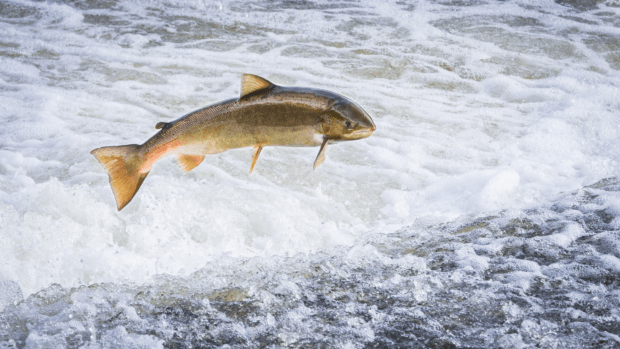
Atlantic salmon are a remarkable and iconic species, known for their impressive life cycle. They hatch in rivers throughout Northern Europe and undertake an extraordinary migration across the North Atlantic to feed and mature before returning to their natal rivers to spawn.
Each year, the Centre for Environment, Fisheries and Aquaculture Science, the Environment Agency, and Natural Resources Wales conduct an assessment of salmon stock levels. This evaluation is crucial for determining the necessary actions to protect this vital species. The annual report offers key insights into the health of salmon populations in England’s major salmon rivers, providing a solid foundation for understanding population trends, identifying rivers at greatest risk, and guiding recovery initiatives where they can be most effective.
Current Status of Atlantic Salmon Stocks
The most recent assessment, based on data from 2025, indicates that Atlantic salmon stocks remain alarmingly low. Projections suggest that 40 out of England’s 42 principal salmon rivers are likely to be classified as either “at risk” or “probably at risk” by 2030. This alarming statistic reveals that 95% of the salmon rivers in England may have populations below sustainable levels necessary for long-term survival. This trend is not unique to England; similar declines are being observed across other jurisdictions in the UK and throughout the North Atlantic region.
Understanding the Decline of Salmon Populations
The decline in salmon populations cannot be attributed to a single factor. It is a widespread issue observed across the North Atlantic, with many contributing factors stemming from marine environments that are beyond the control of any individual nation.
Salmon face numerous challenges throughout their life cycles, both in rivers and at sea. Freshwater habitats are threatened by pollution, migration barriers, and water scarcity, while marine environments are impacted by aquaculture and bycatch. Climate change is exacerbating these pressures, making conditions increasingly hostile for salmon. The decline we see today is the result of these various pressures interacting over time rather than a single cause.
The Ecological Importance of Salmon
Atlantic salmon are not only one of England’s most emblematic fish species; they also serve as a crucial indicator of environmental health.
Due to their dependence on healthy rivers, estuaries, and seas throughout their life cycles, the status of salmon populations provides significant insights into the overall condition of the surrounding ecosystem. Initiatives aimed at improving conditions for salmon can simultaneously benefit numerous other species and contribute to the creation of healthier river environments for both wildlife and humans.
Widespread Challenges Beyond England
The challenges faced by salmon populations are not confined to England. Declines are being reported throughout much of the North Atlantic, indicating a large-scale and complex issue affecting the species globally.
Initiatives for Salmon Recovery
Efforts to enhance conditions for salmon recovery include improving river flows, restoring habitats, facilitating fish passage, combating pollution, supporting catchment partnerships, enforcing fisheries regulations, and enhancing scientific knowledge regarding the pressures on salmon populations.
A successful recovery will necessitate sustained collaboration among government bodies, regulators, water companies, environmental organisations, anglers, land managers, and local communities.
The Long Road to Recovery
Salmon possess a complex life cycle, with young salmon spending up to three years in rivers before migrating to the sea, where they may remain for one to two years before returning to spawn. Consequently, it may take several years for improvements in habitat, river health, or migration routes to manifest in salmon population numbers.
As such, recovery is a long-term commitment that requires consistent action over many years.
Possibilities for Recovery in England
Despite the significant pressures they face, recovery of salmon populations in England is indeed possible when conditions improve. There are multiple instances across England where initiatives aimed at enhancing water quality, restoring habitats, and reconnecting rivers have resulted in positive outcomes for salmon populations.
Case Studies of Successful Interventions
In the River Kent, Cumbria, the Environment Agency and its partners have implemented the LIFE R4ever Kent project, which includes the installation of woody fish refuges, the planting of 2,350 native riparian trees to provide shade and moderate summer water temperatures, and the removal of culverts and weirs. These actions are creating cooler, more sheltered habitats conducive to salmon thriving.
Similarly, the Ribble Revival programme in Lancashire, backed by £1.65 million, has facilitated the installation of fish passes, the de-culverting of hidden watercourses, and the creation of new wetlands, thus safeguarding vital habitats and spawning grounds across the catchment.
In Devon’s River Lemon, the Environment Agency, in collaboration with the Westcountry Rivers Trust and the National Trust, has removed the Chipley Mill Weir, reconnecting around 30 km of river and restoring access to salmon spawning grounds deep within Dartmoor National Park, significantly enhancing fish passage on the River Teign catchment.
While recovery demands time and effort, practical actions can significantly improve the conditions necessary for salmon to flourish.
The Role of the Environment Agency in Salmon Recovery
The Environment Agency holds a statutory duty to maintain, improve, and develop salmon populations and fisheries in England.
Successful salmon recovery requires coordinated action across multiple sectors, involving a wide array of organisations, including government entities, international partners, water companies, farmers, local authorities, anglers, fishing communities, and non-governmental organisations (NGOs).
Active partnerships, such as the Great Yorkshire Rivers initiative, exemplify collaborative efforts aimed at addressing the pressures on salmon in both freshwater and marine environments.
Collaborative Efforts for River Restoration
The Great Yorkshire Rivers partnership focuses on reconnecting river habitats, enhancing fish passage, and fostering better conditions for migratory fish. This collaboration unites the Environment Agency, Yorkshire Water, The Rivers Trust, and 13 other organisations with a shared goal of improving river connectivity and supporting the recovery of migratory fish across Yorkshire.
By enhancing fish passage and reconnecting rivers, the partnership is contributing to the development of more resilient river networks and opening access to habitats that have been inaccessible to migratory fish for generations. The recent return of salmon to parts of the River Don catchment illustrates the potential for recovery when barriers are removed and rivers are restored.
The Environment Agency is also a proactive member of the North Atlantic Salmon Conservation Organisation (NASCO). In response to the challenges posed by low river flows, pollution, and physical barriers obstructing access to spawning habitats, the Department for Environment, Food and Rural Affairs (Defra) and the Environment Agency have initiated a long-term recovery programme through NASCO. This initiative aims to unite government bodies, regulators, water companies, and catchment partnerships to collaboratively address these three critical pressures from 2026 to 2032.
This programme is focused on enhancing river flows in priority catchments, tackling pollution through increased inspections and oversight of wastewater, and restoring habitats by removing barriers, improving fish passage, and planting trees to ensure rivers remain cool and resilient. The Environment Agency aims to restore 2,282 hectares of peatland and enhance water flow below reservoirs to ensure sufficient water supply during dry spells. Additionally, it will closely monitor water companies and other users to prevent excessive water extraction that could jeopardise river health.
Alongside these initiatives, the Agency will conduct increased inspections of farms and wastewater treatment works and fund over 800 projects aimed at reducing pollution from wastewater. Furthermore, it plans to clear or enhance 105 barriers that impede salmon from reaching their spawning grounds, restore natural river habitats at 252 sites, and plant 648 hectares of trees along riverbanks to maintain cool and clean water for salmon and other aquatic life.




More Stories
Discover the Health Insights Hidden in Your Waist Measurement
Can Nuclear Regulation Ensure Safety for People and the Environment While Fostering Innovation? Transitioning from Potential to Sustainable Progress
Cortisol Face: Debunking the Social Media Myth and Uncovering the Medical Truth