
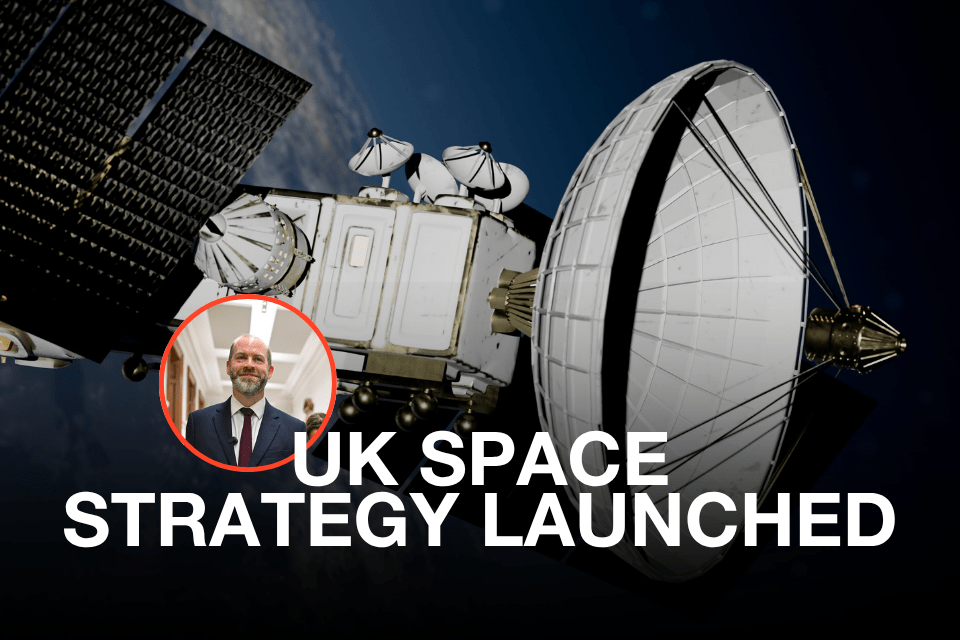
The UK’s Ambitious Space Strategy Unveiled
A new national space strategy has been launched, aimed at integrating the UK’s plans for growth, defence, and national security, all while contributing to the reindustrialisation of the country. This comprehensive initiative, announced on Tuesday, 8 September, signals a significant investment of £7.8 billion through to 2030, consolidating government efforts in the space sector under a single coherent framework. The strategy seeks to stimulate economic growth, bolster security, and support the technologies crucial to modern life.
Recognising the increasing importance of space as a domain for national safety, the strategy includes initiatives to enhance Space Domain Awareness. This involves monitoring objects such as satellites, spacecraft, and debris orbiting the Earth. Notable funding includes £149 million allocated to the European Space Agency’s Vigil mission, alongside £85 million for the National Space Operations Centre. These investments aim to improve early warning systems for potential satellite collisions, hostile activities, and solar storms, thereby safeguarding essential services such as power, communications, and navigation.
Strengthening Defence Through Enhanced Space Capabilities
The strategy also allocates £880 million to fortify the UK’s space control capabilities, including intelligence, surveillance, and reconnaissance technologies. This funding will facilitate tracking military activities and potential threats to satellites, enabling swift and decisive action to protect the nation’s interests both on Earth and in space.
Moreover, a substantial £2.8 billion will be directed towards enhancing connectivity, particularly through the Connectivity in Low Earth Orbit and SKYNET defence communications programmes. These programmes are vital for ensuring that the Armed Forces remain connected, regardless of their global location. The benefits of these advancements will extend to the general public, improving connectivity in rural areas and reducing mobile signal dropouts, particularly on train services through the use of advanced satellite communications.
Encouraging Economic Growth and Job Creation
The UK space sector, currently valued at £18.6 billion and supporting over 55,000 skilled jobs, is set for significant growth as a result of these investments. The strategy aims to solidify Britain’s position as a global leader in space, with a focus not only on satellite services that underpin the economy but also on pioneering missions such as the UK-built Rosalind Franklin Mars Rover.
Business, Innovation, Science and Trade Secretary Jonathan Reynolds commented on the strategy, stating, “As space becomes a new frontier of economic and military competition, this plan will help keep Britain secure by strengthening our ability to launch satellites, detect threats, and protect the services people rely on every day.” He emphasised the dual focus on enhancing security while enabling the UK industry to seize the vast opportunities presented by advancements in space technology.
Investment in Future Technologies and Sustainable Operations
Defence Secretary Wes Streeting highlighted the strategic importance of the space strategy, asserting that national security relies on maintaining freedom of action in space and the capability to protect UK and allied assets. He noted that the strategy is supported by a Defence Investment Plan, which will see over £3 billion invested to ensure that the UK’s defence capabilities in space remain robust against evolving threats.
The strategy also presents an opportunity to foster future jobs and enterprises, with a £40 million investment aimed at supporting innovative in-orbit servicing, assembly, and manufacturing technologies. These advancements will facilitate the repair and maintenance of satellites affected by space debris or hostile interference, while also ensuring continued operational capacity in space.
Broader Benefits and Collaborative Efforts
Additional support for the UK’s diverse space sector includes £148 million for European rocket programmes and £30 million for the SaxaVord Spaceport in Shetland, which will enable satellite launches without reliance on foreign capabilities, thus generating new employment opportunities. Funding for space science and exploration missions, including the Rosalind Franklin Mars Rover, totals £163 million and aims to enhance world-leading research while contributing to the UK’s reindustrialisation efforts through high-skilled jobs in emerging technologies.
In a significant shift, the government plans to adopt a unified approach to procuring and developing space technologies, starting with satellite communications. This approach is expected to enhance the competitiveness of British firms, fortify supply chains, and support the creation of skilled jobs, all while delivering improved value for taxpayers.
A New Era for UK Space Regulation and Collaboration
The new strategy replaces the previous National Space Strategy established in 2021 and is integral to the Modern Industrial Strategy, which aims to foster reindustrialisation and sustainable growth throughout the UK. To complement the strategy, reforms to space regulations will be introduced, aimed at reducing costs, rewarding responsible operators, and facilitating investment in cutting-edge initiatives ranging from satellite servicing to lunar exploration.
Industry leaders have expressed their support for the new strategy, with Doug Liddle, Chair of UKspace, noting that it provides a constructive path towards a more collaborative approach in the UK space sector. Kevin Craven, CEO of the ADS Group, emphasised the importance of maintaining a transparent and ambitious partnership between the government and industry to realise national security and growth objectives.
In addition, academics and industry representatives have welcomed the focus on sustained investment, underscoring the critical role that space technologies play in modern life, from secure communications to environmental monitoring.
Overall, the UK’s new space strategy marks a significant milestone in the country’s trajectory towards becoming a leading player in the global space arena, with far-reaching implications for national security, economic growth, and technological innovation.




More Stories
Graham Bell Announces Retirement: A Farewell to an Iconic Career
Welfare System Reforms Expected to Generate £1.9 Billion in Savings by 2030/31
Neil Sachdev’s Tenure as Chair of HM Land Registry Extended: What It Means for the Future