
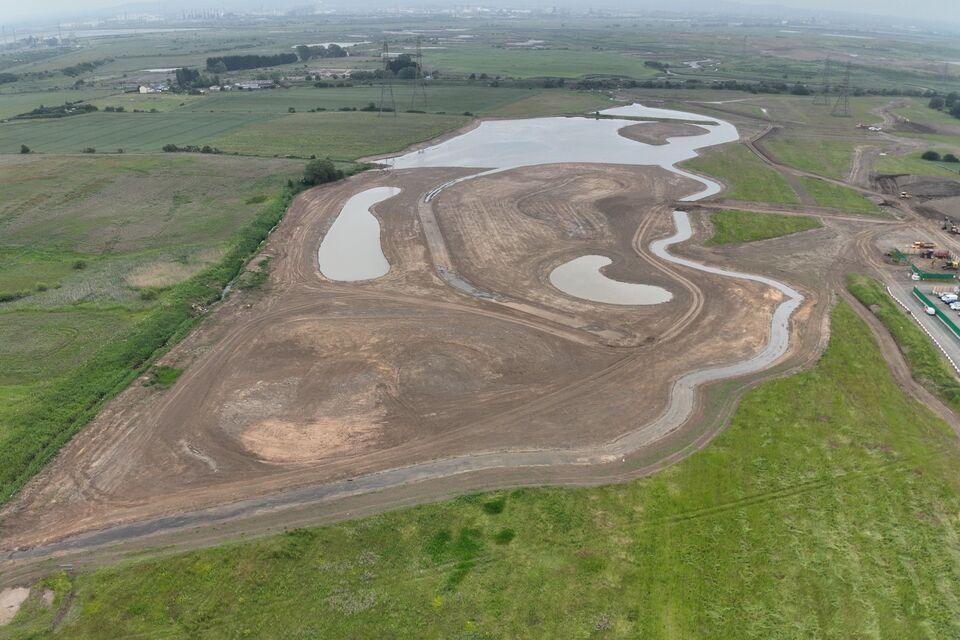
A new £4.5 million initiative has successfully reinstated the tide for the first time in over two centuries, following the completion of the Environment Agency’s Greatham Marsh Restoration Scheme in Hartlepool.
Reviving Natural Waterways
The Environment Agency, in collaboration with The Greatham Foundation and Northumbrian Water, has restored the original path of Greatham Beck and eliminated a tidal barrier, enabling the tide to return to an area that was reclaimed from the sea over 200 years ago.
This restoration is part of the broader £30 million Tees Tidelands Programme, which aims to realign flood defences, restore intertidal and river habitats, and reconnect local communities with the estuary.
The Restoration Efforts
The project has revitalised the beck to its former course, which was filled in approximately 50 years ago. Old flood banks were dismantled, and an unnecessary tidal sluice was removed, allowing coastal saltmarsh to naturally re-establish itself and provide essential wetland habitats for wildlife.
Through these efforts, 21.3 hectares of coastal saltmarsh, mudflat, and high tide roosts will be restored, offering vital habitats for internationally significant species such as curlews and avocets. Additionally, the restoration is set to enhance water quality and bolster the area’s resilience against climate change and rising sea levels.
Following the construction’s successful completion, plans are in place to plant native hedgerows alongside enhancements to existing hedgerows and tree planting initiatives. Furthermore, 9 hectares of neutral grassland will be sown to enrich the local ecosystem.
Enhancing Biodiversity and Climate Resilience
Matthew Rountree, Project Manager at the Environment Agency, remarked on the significance of the project: “This initiative facilitates the restoration of a substantial area of coastal saltmarsh within the Tees Estuary through natural processes. The area will provide invaluable habitats for wildlife while sequestering hundreds of tonnes of carbon annually.”
He further added, “By allowing Greatham Beck to revert to its natural form, we are re-establishing balance in the estuary and enabling the tide to return to regions lost due to development. This also paves the way for migratory fish to make a return after decades of absence.” The next steps involve seeding the intended grassland and planting 1.7km of species-rich native hedgerow and ecologically valuable treeline.
Community and Environmental Impact
Deborah Lewis-Bynoe, Chief Executive of The Greatham Foundation, expressed pride in the project’s completion: “The successful culmination of the Greatham Saltmarsh Restoration Scheme is a significant milestone, and we are extremely proud to have collaborated with the Environment Agency and Northumbrian Water. Our partnership reflects our commitment to enhancing the sustainability of our charity and creating a lasting, positive impact across our communities, both for individuals and the environment.”
Richard Warneford, Wastewater Director at Northumbrian Water, highlighted the extensive benefits of the scheme: “The advantages derived from this initiative are substantial and varied, ultimately resulting in positive outcomes for the environment and a significant boost for the Tees region. Being part of the Greatham Marsh Restoration Scheme aligns with our broader commitment to enhancing the Tees Estuary through direct investment and collaborative efforts.”
Context and Future Steps
Northumbrian Water has invested £2.086 million into the Greatham Marsh project to explore the nutrient reduction benefits of the scheme’s approach. The site lies adjacent to the Teesmouth and Cleveland Coast Special Protection Area (SPA) and Ramsar site, which is also recognised as a Site of Special Scientific Interest (SSSI).
Saltmarshes play a crucial role in capturing nutrients that could otherwise lead to algal blooms, which suffocate mudflat habitats and hinder birds from foraging for worms. The project is expected to aid in combating climate change by enhancing carbon sequestration.
In collaboration with partners such as The Greatham Foundation, BAM Nuttall, JBA Consulting, Turner & Townsend, and Northumbrian Water, the Environment Agency has navigated various challenges throughout the project, including adverse weather conditions, archaeological discoveries, and the presence of nesting birds.
A Vision for the Tees Estuary
The River Tees Estuary is situated at the heart of one of the North East’s industrial hubs. While this industry is essential for employment and the economy, human activity has resulted in the loss of 90% of the intertidal habitats that once thrived in the area, along with barriers obstructing all tributaries.
The Tees Tidelands Programme is a pioneering initiative aimed at helping the River Tees estuary adapt to climate change by restoring over 50 hectares of mudflats, saltmarsh, and other valuable estuarine habitats, as well as reducing flood risks for homes and businesses now and in the future.
Upon completion, the programme will provide long-term flood risk management alongside significant enhancements to local ecology and water quality. The ambitious initiative encompasses projects across Teesside at locations near Greatham, Port Clarence, Portrack, and along the banks of the River Tees, as well as in rivers such as Lustrum Beck, Ormesby Beck, and Billingham Beck.
About The Greatham Foundation
The Greatham Foundation is a charity with a rich history dating back to 1273, dedicated to assisting older individuals and those affected by dementia in living well within supportive communities. Through various initiatives—including a residential care home, community-based dementia support, day services, Almshouses, and grant funding—the foundation aims to improve lives, reduce isolation, and create a lasting social impact across the region. For more information about The Greatham Foundation and its work, please visit www.thegreathamfoundation.org.uk.




More Stories
Unveiling the UK’s Arctic Policy Framework: Minister Kumaran’s Keynote Address
UK Champions Two-State Solution for Lasting Peace and Security for Israelis and Palestinians
Prime Minister Proposes Collaboration with Holyrood to Empower Scottish Regions