
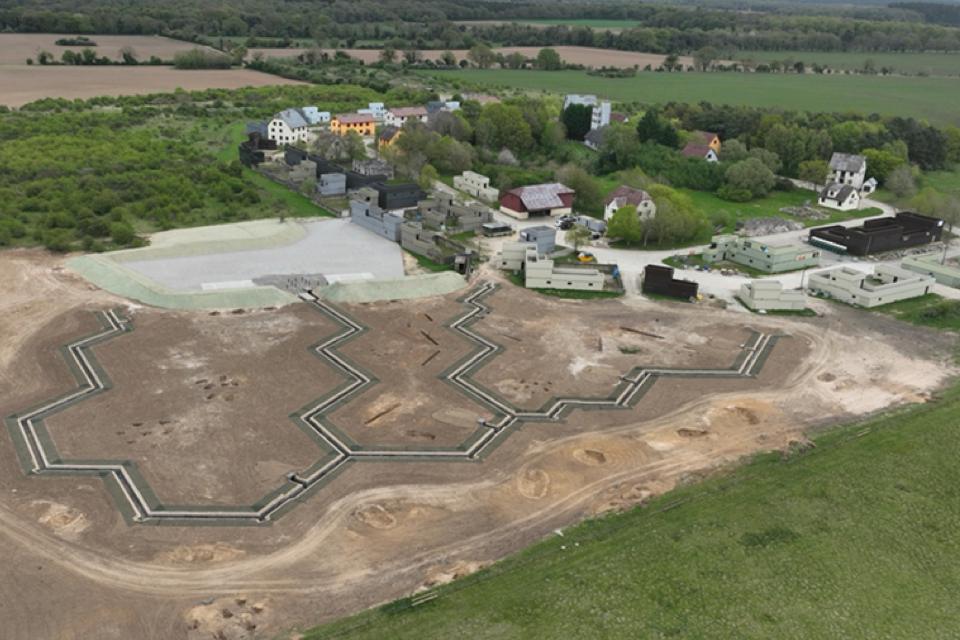
In a significant collaborative effort between the Defence Infrastructure Organisation (DIO), the British Army, and Landmarc Support Services, a new investment initiative has been launched, featuring state-of-the-art trench systems at Copehill Down Training Village on Salisbury Plain, as well as Eastern European-style trench networks at Eastmere Village within the Stanford Training Area (STANTA) in Norfolk.
These developments aim to enhance training facilities and contribute to the Army’s broader modernisation efforts, offering soldiers realistic environments to hone the skills necessary for contemporary operations.
Modern Facilities for Contemporary Warfare
The newly designed facilities accurately reflect the complexities of modern conflict, incorporating extensive trench networks, fighting positions, covered command posts, protected shelters, bunkers, observation points, firing platforms, and vehicle positions. These elements are integrated into existing training areas, creating challenging and authentic environments that enable military personnel to engage in realistic operational scenarios.
Brigadier Gavin Hatcher CBE, Head of Overseas and Training Region at the Defence Infrastructure Organisation, remarked, “These projects illustrate our ongoing commitment to investing in the Defence Training Estate and ensuring that our armed forces have access to the necessary infrastructure for effective training. Collaborating closely with Landmarc and the British Army, we have developed facilities that mirror the evolving nature of warfare and support rigorous, realistic training. This investment will guarantee that our training estate continues to offer world-class facilities, preparing soldiers for the challenges presented by modern operations.”
Adapting Training to Evolving Conflict
Colonel William Robinson, Deputy Chief of Staff at the Land Warfare Centre, emphasised the importance of adapting training environments to keep pace with the evolving character of conflict. “These new trench systems provide soldiers with realistic facilities that enhance their tactical skills, decision-making capabilities, and battlefield awareness under representative conditions. Investing in infrastructure like this is crucial to ensuring the Defence Training Estate remains dedicated to delivering exceptional training that supports our operational readiness.”
David Morgan, Programme Director at Landmarc, added, “The Defence Training Estate is a national asset, and its continued relevance depends on ongoing investment and innovation. These projects exemplify how customer insight, engineering expertise, and collaborative delivery can effectively transform emerging requirements into realistic and enduring training capabilities, thus supporting the changing needs of modern military training. The upgraded facilities will offer lasting benefits to the armed forces and ensure the estate remains prepared for future challenges.”
Collaborative Efforts in Infrastructure Development
The successful delivery of these projects involved collaboration with specialist supply chain partners, who contributed their expertise in military infrastructure, construction, and estate development. The Stanford Training Area project received support from Knights Brown Construction, 5C Consulting, and Land Sculpture Civils.
Through investment in modern training infrastructure, the Ministry of Defence is committed to ensuring that the Defence Training Estate evolves in line with the shifting dynamics of warfare. This initiative provides Service personnel with the environments needed to develop and sustain operational advantages. These projects are part of a broader defence programme focused on estate investment and modernisation, ensuring that the estate remains fit for purpose for both current and future generations, in accordance with the objectives outlined in the Defence Investment Plan.


More Stories
Exciting Announcement: New Regius Professorship of Medicine to be Established at the University of Oxford on 14 October 2026
UK Emphasises Importance of Syria’s Sovereignty for Stability and Economic Recovery at UN Security Council
Exchequer Secretary to the Treasury Addresses Key Growth Strategies at West Midlands Summit