
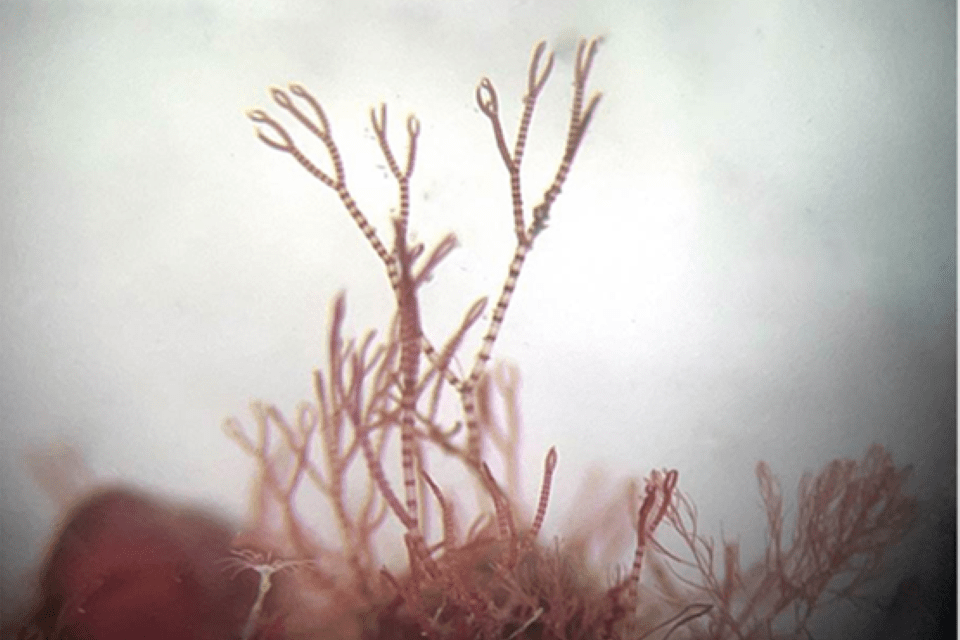
Recent underwater surveys conducted by Natural England off the south coast of Cornwall have revealed an astonishing variety of rare and scientifically significant seaweeds, including species that have never before been recorded in the United Kingdom.
Among the remarkable findings are species that have not been observed for centuries, alongside a diminutive red seaweed that has been confirmed as entirely new to science.
New Discoveries in Maerl Beds
The newly identified species, Ceramium (commonly known as pincer weed), measures only a few millimetres in size, making it exceedingly difficult to identify until now. Divers retrieved living fragments of the seaweed, which allowed scientists to cultivate it in laboratory conditions and sequence its DNA for the first time.
These discoveries highlight the extraordinary biodiversity that exists within our coastal waters and the many secrets they still hold, as well as underscoring the unique character of Cornwall’s marine landscapes. Notably, Cornwall hosts the majority of England’s maerl beds.
Angie Gall, Senior Marine Officer at Natural England, commented on the significance of these findings: “These discoveries show just how special these habitats are. We’ve already recorded more than 350 species living on the surface of the maerl beds, and that’s only the beginning. Many more species live hidden within the maerl or appear at different times of year. There is still so much to uncover. Maerl beds are living archives of our natural history. Protecting them is essential if we are to safeguard marine biodiversity for future generations.”
Historical Significance of the Findings
Professor Christine Maggs, a leading authority on seaweed taxonomy, expressed her excitement over the discoveries: “I first encountered this tiny Ceramium in the early 1980s, and I have been wondering about it ever since. It’s so minute that you can only study it if divers bring it up alive, and even then it takes careful cultivation to get enough material to work with. Natural England’s surveys finally provided the missing piece of a scientific puzzle I’ve been trying to solve for most of my career.”
The surveys also noted the presence of Ulva rigida, a green sea lettuce that had never been confirmed in the UK, as well as Neofolia rosea (little rosy tongue weed), which has only been found once before in the UK at this same site, and Bonnemaisonia clavata, a delicate red seaweed last reported in British waters during the 18th century.
The Importance of Maerl Beds
Maerl beds, formed by slow-growing, coral-like red seaweed, rank among the most biodiverse shallow-water habitats in the north-east Atlantic. These fragile and irreplaceable ecosystems play a crucial role in supporting healthy fisheries, providing nursery grounds and shelter for a diverse range of marine life. Additionally, maerl beds are significant in sequestering carbon, as they trap it within the sediments.
Following initial reports from citizen scientist divers involved in the Seasearch project, Natural England’s efforts in 2023 and 2024 have led to the discovery of extensive areas of previously unknown maerl beds off England’s south coast, serving as a reminder that even in well-explored waters, substantial ecosystems can remain hidden.
Conservation Challenges Ahead
Seaweed expert Francis Bunker, who was instrumental in discovering the minute Ceramium during these surveys, stated: “Finding species new to science in our waters is thrilling. But it also shows how much biodiversity is still hidden in these beds and what we stand to lose if these habitats are damaged before we’ve fully understood them.”
The findings bear striking resemblance to other biodiverse habitats around the globe that are being degraded or destroyed faster than researchers can document them. Ongoing threats such as physical disturbances, including scallop dredging, pollution, and climate change, continue to pose risks to the integrity of maerl beds.
These discoveries underscore the urgent need for conservation efforts to protect these vital habitats, not only for the remarkable species they currently support but also for those that remain undiscovered.




More Stories
UK Prime Minister to Hold Key Talks with President Zelenskyy of Ukraine on 14 October 2026
Government Launches Ambitious Initiative to Restore Churches and Revitalise Heritage Buildings Across England
UK Government Allocates Funds for Vital Repairs to Chornobyl Nuclear Power Plant Following Russian Drone Strike