
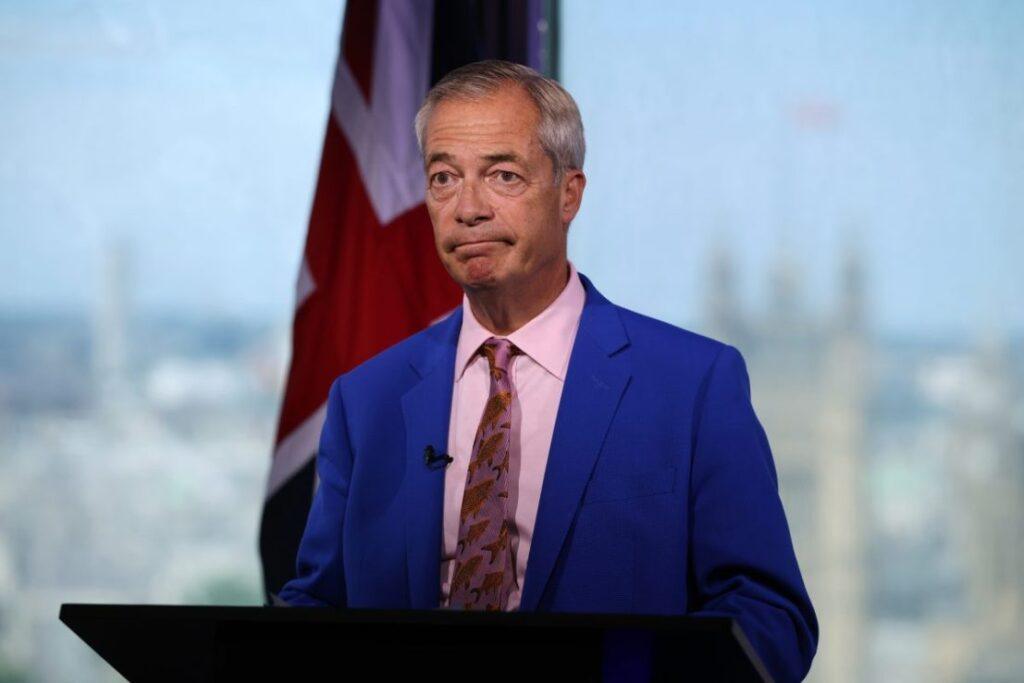
In recent months, the political landscape in the United Kingdom has taken a significant turn, raising questions about the future of Nigel Farage and Reform UK. Once a prominent force in British politics, Farage’s influence seems to be waning, suggesting that the upcoming election may boil down to a contest primarily between the Labour Party and the Conservative Party.
Shifting Political Dynamics
The rise of Reform UK, spearheaded by Farage, initially appeared to resonate strongly with a segment of the electorate disillusioned with the traditional parties. However, recent polling and electoral trends indicate a decline in support for the party, as voters increasingly gravitate towards the established contenders. This shift has been particularly noticeable as the political climate evolves post-Brexit, with many citizens prioritising stability and continuity over the more radical changes proposed by Farage’s party.
As the general election approaches, the narrative surrounding Farage seems to suggest that his brand of politics may not be as appealing as it once was. The British public appears to be focusing on key issues such as the economy, healthcare, and national security, areas where the Labour and Conservative parties are actively competing for voter attention.
The Labour and Conservative Showdown
With Farage’s influence diminishing, the battleground for the next election is shaping up to be predominantly between Labour and the Conservatives. Both parties are now keenly aware of the stakes involved, as the outcome could determine the direction of the country for years to come. Labour, under its current leadership, has been working tirelessly to present a compelling alternative to the Conservatives, who have been in power for over a decade.
The Conservative Party, facing challenges from within and dealing with public discontent over various issues, is also preparing for a fierce contest. The party’s strategy will likely revolve around showcasing its achievements while addressing the criticisms levelled against it. In this climate, the absence of a strong third party could mean that the electorate’s choices are starkly defined, leading to a more binary decision at the polls.
Future Implications for Reform UK
The potential decline of Reform UK raises important questions about its future role in British politics. While Farage has been a significant figure in shaping the discourse surrounding Brexit and national identity, the current trajectory suggests that his party may struggle to maintain relevance in a landscape increasingly dominated by the two main parties. This situation could lead to calls for a reevaluation of Reform UK’s political strategy and its positioning within the broader spectrum of British politics.
As the political environment continues to evolve, it remains to be seen how Farage and his party will adapt to these challenges. The next election could very well mark a pivotal moment, not just for Labour and the Conservatives, but for the future of all political factions in the UK.




More Stories
Pension Savers Reclaim £188 Million After HMRC Overtaxes Withdrawals: A Shocking Oversight
How UK Tax Regulations Influenced the Recent Transfer Window
Revolutionary Inheritance Tax Changes Set to Transform Pension Utilisation in the UK