
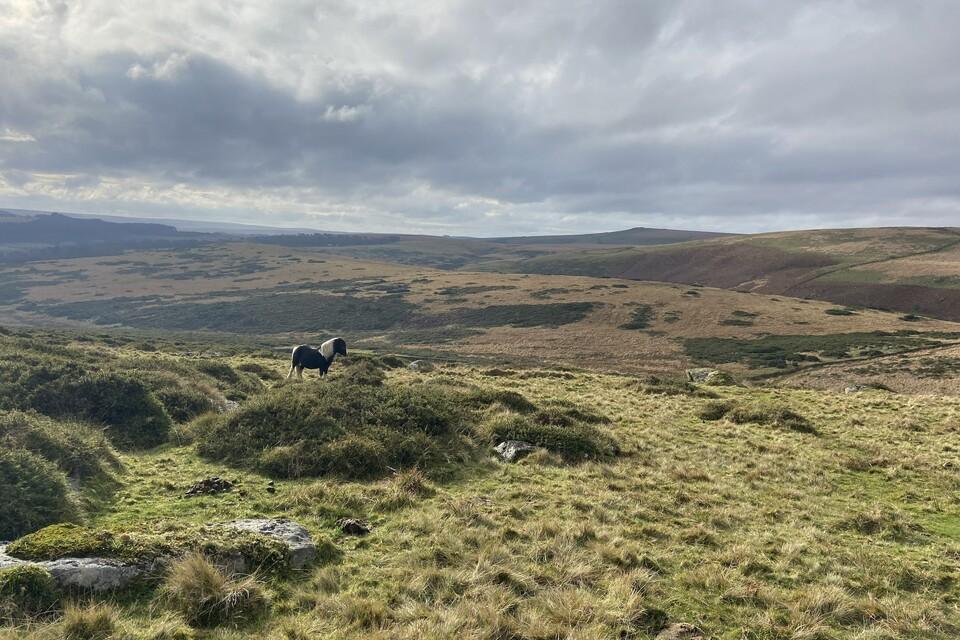
The government has today secured the long-term future of Dartmoor’s iconic pony populations through a new package of protections and financial support. This initiative aims to preserve these rare breeds and semi-wild hill ponies, which are integral to Dartmoor’s landscape and cultural heritage.
These ponies play a significant role in conserving protected environmental sites across the moor, and the government is dedicated to ensuring their populations remain stable. With the introduction of new Environmental Management agreements, Dartmoor ponies will now be excluded from stocking rate calculations. This adjustment means that farmers will no longer have to choose between keeping ponies and maintaining sheep or cattle, in line with recommendation 27 of the 2023 Fursdon Review, an independent assessment of protected site management on Dartmoor. Additionally, monitoring of pony populations will be implemented to guarantee their numbers do not decline.
New Financial Incentives to Support Pony Populations
A dedicated pony supplement will be integrated into farming schemes, designed to eliminate any financial motivation for farmers to reduce their pony herds. Furthermore, the government has tasked the Dartmoor Land Use Management Group with creating a comprehensive grazing framework that considers all interests collectively.
Dartmoor stands as one of England’s most significant and unique landscapes, boasting internationally important habitats and wildlife. However, many areas of the moor are experiencing long-term ecological decline. Striking the right balance in grazing practices is crucial for supporting nature recovery while ensuring the sustainability of farming communities on the moor.
Statements from Key Stakeholders
Marian Spain, Chief Executive of Natural England, emphasised the importance of Dartmoor’s ponies in shaping the landscape and supporting natural ecosystems. She expressed optimism that the recent policy changes will facilitate collaboration with farmers to establish necessary agreements for nature recovery on Dartmoor.
Phil Stocker, Chair of the Dartmoor Land Use Management Group, noted that this announcement provides reassurance to pony keepers regarding the intrinsic value of Dartmoor’s native pony populations in both ecological and cultural contexts. He highlighted ongoing trials aimed at demonstrating how well-managed ponies, alongside cattle and sheep, can improve habitat conditions and benefit broader biodiversity.
Charlotte Faulkner, Chair of the Dartmoor Hill Pony Association, expressed gratitude to the Secretary of State for listening to the voices of over 220,000 individuals concerned about the future of the semi-wild Dartmoor Hill Pony herds. She stressed that this decision will bolster Dartmoor’s biodiversity, culture, and tourism, ensuring the preservation of the moor for future generations.
Positive Outcomes for Native Breeds
Catherine Anderson, Head of Operations at the Dartmoor Pony Heritage Trust, expressed satisfaction with the proposed measures. She praised the review of support for native breeds at risk, affirming that it will help maintain pony herds on Dartmoor for generations. The new payment schemes are also anticipated to provide substantial incentives for farmers to retain their ponies on common land.
Currently, between 900 and 1,500 ponies graze on Dartmoor, and today’s announcement ensures that their populations will be maintained at no less than current levels. With 28% of the moor designated as a Site of Special Scientific Interest (SSSI), Dartmoor is recognised for its rare and internationally significant habitats.
Dartmoor Hill Ponies are classified by Defra as a Native Heritage Semi-Feral population and are designated as “at risk” on the Native Breed Support register. They qualify for payments under the Environmental Land Management (ELM) scheme supplementary actions aimed at supporting native breeds at risk, alongside supplementary actions that incentivise the maintenance of cattle and ponies on moorland.
Wider Implications for Conservation Grazing
The recent announcement also aligns with a recommendation from the Fursdon Review, which advocated for separate treatment of ponies and cattle in livestock stocking rates under government farming schemes. The new pony supplement is set to benefit those grazing ponies in other upland areas across England, such as Exmoor and the Cumbrian Fells. Eligible farmers will be able to apply for this supplement, recognising the crucial role ponies play in conservation grazing throughout England’s diverse landscapes.




More Stories
Prime Minister’s Key Address at the King’s Trust Centre on 15 October 2026
Wes Streeting Delivers Keynote Address at the Centre for Strategic and International Studies
Decommissioning Calder Hall: The Historic Journey of the World’s First Commercial Nuclear Power Station