
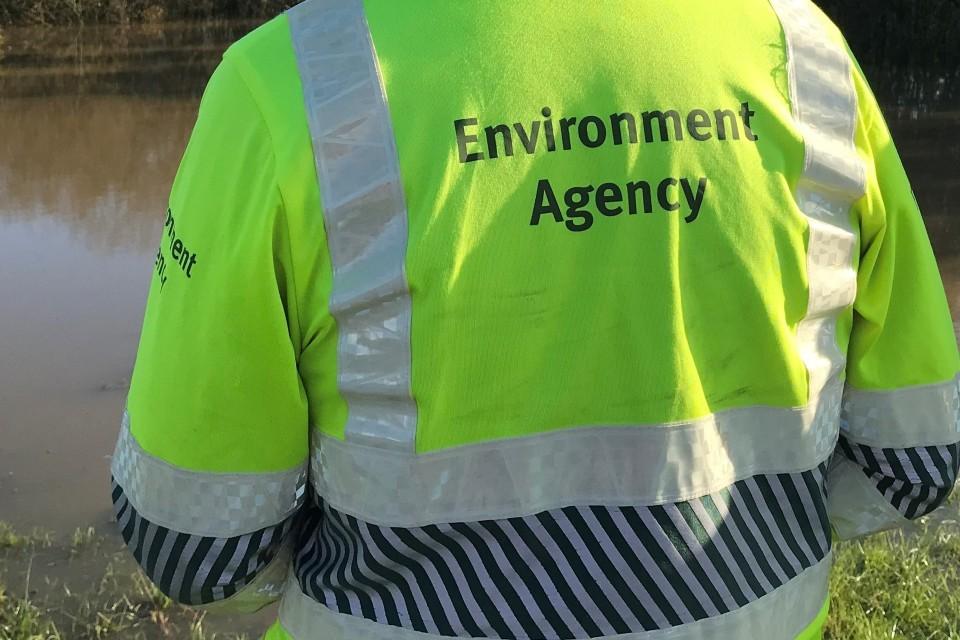
In a significant legal ruling, Essar Oil (UK) Limited, one of the largest oil refinery operators in the UK, has been ordered to pay a total of £873,473 at Warrington Magistrates’ Court after pleading guilty to 12 charges brought by the Environment Agency. This decision follows incidents in 2019 that resulted in the discharge of up to 20 tonnes of chemicals and 15 tonnes of sewage into watercourses that lead to the protected Mersey Estuary.
During the proceedings, the company admitted to breaching permit limits at its Stanlow Manufacturing Complex in Ellesmere Port, Cheshire, on no fewer than 489 occasions between 2018 and 2020. The court imposed a fine of £80,000 for each of 10 of the offences and mandated the payment of £73,473 in costs. Notably, there was no additional penalty for two other charges linked to the aforementioned incidents from 2019.
Details of the Offences
The ten charges primarily involved exceeding permit limits concerning trade effluent, including suspended solids, oils, and various chemicals such as cyanide. The contaminated water was subsequently discharged into Thornton Brook, the River Gowy, and the Manchester Ship Canal.
In February 2019, an incident occurred in which between 15 and 20 tonnes of a chemical used for hydrogen gas removal leaked into the drainage system, eventually flowing into the ship canal. Investigations revealed that a vent had been left open and operational procedures had not been adhered to, which the company described as “a conscious deviation from operating procedures.”
A further incident in March 2019 involved a contractor’s vehicle reversing into an effluent pipe, leading to a rupture. Repairs to this pipe, which extended until April, resulted in approximately 15 tonnes of partially treated sewage being discharged into Thornton Brook, which connects to the Mersey Estuary. The individual responsible for this incident was subsequently banned from the site, and it was determined that the risks associated with vehicle operations had not been adequately assessed.
Environmental Oversight
Officers from the Environment Agency conducted multiple site visits, reporting observations of a silver sheen of oil on Thornton Brook, the River Gowy, and the Manchester Ship Canal. By January 2020, vegetation downstream from the refinery’s discharge point had turned black due to oil contamination.
Nigel Glasgow, Area Environment Manager at the Environment Agency, commented on the case, stating that oil refineries are substantial industrial operations that must adhere to environmental permits designed to safeguard rivers, seas, and wildlife. He noted the company’s repeated failures to comply with permit conditions, highlighting that there were at least 489 exceedances over a three-year period. Glasgow emphasised that operators bear a fundamental responsibility for managing their sites effectively and that the Environment Agency would continue to enforce regulations and investigate any breaches.
Conservation Considerations
The Mersey Estuary is protected under various conservation designations, including as a Site of Special Scientific Interest and a wetland of international significance, playing a crucial role in supporting the migration routes of birds and fish.
Essar Oil (UK) Limited acknowledged its guilt on 11 March 2026, receiving credit for its early plea. The refinery operates under an environmental permit issued by the Environment Agency, which stipulates strict limits on discharges into surface waters. The first ten charges were linked to violations of Condition 3.1.2 of the permit, which prohibits exceeding emission limits for water discharges. The breaches occurred at the Stanlow Manufacturing Complex between January 2018 and December 2020. Charges 11 and 12 pertained to failures in adhering to Condition 1.1.1 of the permit, which mandates the management and operation of activities in accordance with a written system that minimises pollution risks.
The company also requested that the court consider three additional offences related to similar permit breaches that occurred in 2022 and 2023. These were acknowledged but did not incur further penalties. Chemical oxygen demand is a metric used to gauge the level of organic and chemical pollutants in water, with phenols and cyanide classified as toxic chemical compounds.




More Stories
PM Holds Key Meeting with Dutch Prime Minister Jetten on 21 November 2026
UK’s Ambitious NATO Space Launch Initiative Aims for the Stars
UK Condemns Damage to Diplomatic Premises Amid Russian Assaults on Ukraine: Key OSCE Statement