
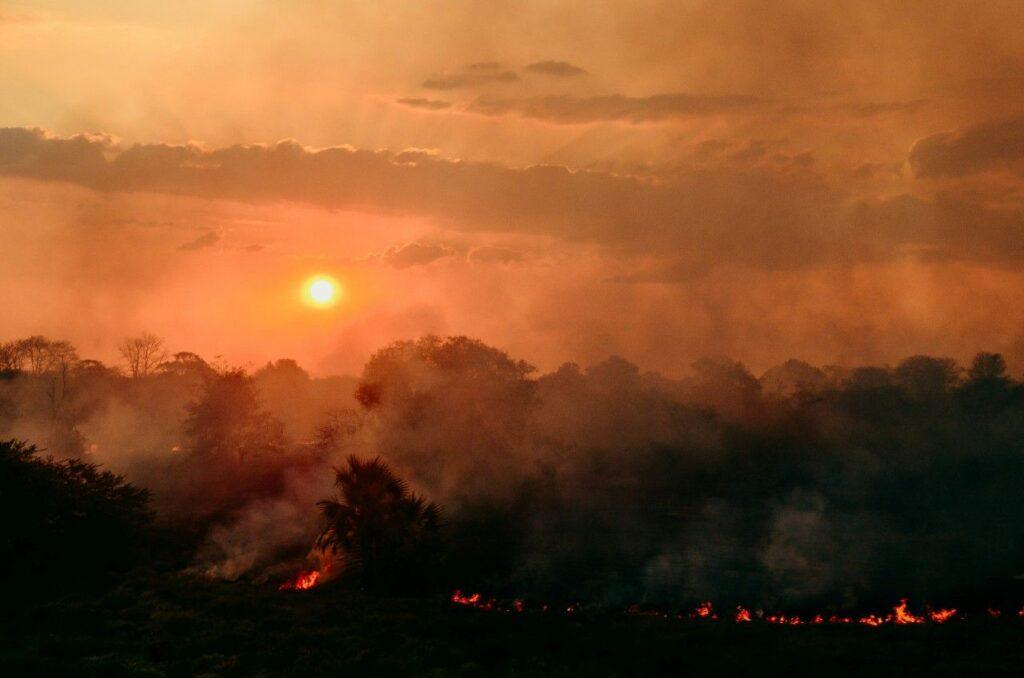
The latest global report on wildfires reveals that the extreme fire conditions observed in Iberia during 2025 were three times more probable due to human-induced climate change, resulting in an area burned that was also three times larger than previous estimates.
This comprehensive report, unveiled at the COP31 climate conference in Antalya, highlights that 2025 recorded the most extensive wildfire area in the European Union, surpassing even the figures for 2026, as documented by the European Forest Fire Information System (EFFIS). The wildfire season was particularly intense in Iberia, where over 40,000 individuals were evacuated amid the outbreak of 14 significant wildfires. Spain reported its highest burned area since 2002, while Portugal experienced its largest single wildfire event on record.
Forecasts indicate that similar fires could potentially burn up to one-third more land within the next two decades. However, the research emphasises that substantial reductions in emissions could significantly mitigate the severity of extreme fires in the latter part of the century.
The report cautions that climate change is increasingly making severe wildfires more probable, intense, and damaging in numerous regions globally. Case studies examining catastrophic fires in Canada, Northwest Iberia, and Chile demonstrate the profound effects such events can have on both human populations and vital ecosystems. Nevertheless, the findings also affirm that reducing human-induced emissions can notably influence the scale of future fire incidents.
Research Collaboration and Findings
The State of Wildfires 2025–2026 report consolidates insights from scientists associated with various institutions, including the Met Office, the European Centre for Medium-Range Weather Forecasts (ECMWF), the University of East Anglia (UEA), and the UK Centre for Ecology & Hydrology (UKCEH), as well as leading experts from over 20 nations.
A wildfire scientist noted that these findings convey a crucial message: the visible impacts of climate change on extreme fires are already apparent worldwide. However, with decisive action to curtail emissions, it remains possible to prevent more severe fires in the future.
A megafire is defined as an event involving a burned area of at least 100 square kilometres.
Understanding the Drivers of Extreme Fires
Throughout the State of Wildfire reports, researchers have identified two distinct climate-related patterns that have contributed to recent extreme wildfires. Prolonged drying periods preceding extreme fire weather have led to exceptional fires in carbon-dense regions such as Canada, the Amazon, the Pantanal-Chiquitano region, and the Congo Basin. In regions where fuel is limited or where fire-adaptation is necessary, such as Northwest Iberia and Los Angeles, unusually wet conditions promoted vegetation growth before rapid drying and extreme heat set the stage for exceptionally intense fires. Similar patterns of wet conditions followed by drying were also linked to the extreme fires that occurred in Europe during the summer.
A lead author from ECMWF explained that enhanced vegetation growth following unusual wet spells in areas like Iberia, combined with extreme heat and drought, heightens the fire risk through a phenomenon known as hydroclimatic rebound, thereby establishing conditions conducive to severe fires.
In Chile, a more complex interplay of both vegetation conditions and drying contributed to the fires, although prolonged drying was the predominant factor behind the events of January and February 2026.
The Influence of Climate Change on Wildfire Risks
The research team employed satellite data on wildfires, vegetation cover, and weather conditions alongside various climate and fire models to evaluate the impact of climate change on fire risk during three significant wildfire episodes in the 2025-26 season across Canada, Northwest Iberia, and Chile. The analysis indicates that climate change has markedly increased both the probability and extent of major wildfire events:
- In Canada, the likelihood of burned areas has increased tenfold, with the scale of fires being nine times greater.
- In Northwest Iberia, the area burned was approximately three times larger and significantly more likely to occur.
- In Chile, the burned area was roughly double and more probable.
An expert from the UK Centre for Ecology & Hydrology stated that the most pronounced signals of climate change are evident in the most extreme fire events rather than in typical fire activity. This suggests that future wildfire seasons may not only worsen uniformly, but the most damaging years are likely to intensify.
Regional Impacts of the 2025-2026 Fire Season
Despite the 2025–2026 global fire season recording the lowest global burned area and fire emissions since 2002, largely due to minimal burning in African savannas, this overall metric obscures severe regional extremes. These fires have had significant repercussions on air quality, led to fatalities and mass evacuations, incurred substantial socioeconomic costs, and impacted carbon-rich ecosystems.
Among the most notable events of the 2025-26 fire season were those in Canada, Northwest Iberia, and Chile/Argentina.
- In Canada, an extreme wildfire season unfolded during July and August 2025, with fire emissions nearly triple the average from 2002 to 2024. Approximately 70,000 individuals were evacuated, direct costs reached around USD 360 million, and air quality was severely compromised. Climate change is believed to have nearly doubled the likelihood of extreme fire weather, significantly affecting burned area. Projections indicate that under a high-emissions scenario, fires akin to those of 2025 may burn 6% more area by century’s end.
- Northwest Iberia experienced some of its largest fires on record during an August 2025 episode, resulting in 14 fatalities and over 42,000 evacuations. Climate change rendered the extreme fire weather three times more likely during this period. Future projections suggest that under a high-emissions scenario, fires similar to those of July and August 2025 could burn 78% more area by the century’s end, with estimates indicating potential increases of up to sevenfold.
- In Chile, fires across the temperate forests and northern Patagonia resulted in 23 fatalities and displaced around 52,000 people. These fires reached Los Alerces National Park, a UNESCO World Heritage Site, threatening ancient alerce forests containing millennia-old trees. Climate change increased the likelihood of extreme fire weather during this episode by approximately 50%. Projections indicate that under a high-emissions scenario, fires similar to those of January and February 2026 could burn around 34% more area by the end of the century.
An academic from the University of East Anglia remarked that the events of 2025-26 underscore that not all fires are of equal impact. Although it was a year with lower global area burned, the series of high-impact events had devastating regional consequences and contributed significantly to CO2 emissions, further accelerating climate change.



More Stories
Severe Weather Alert: Heavy Rain Forecasted for Southwest This Sunday
Severe Snow Warning Issued as Unsettled Weather Persists
UK Weather Update: Cold Spell Continues Across the Country