
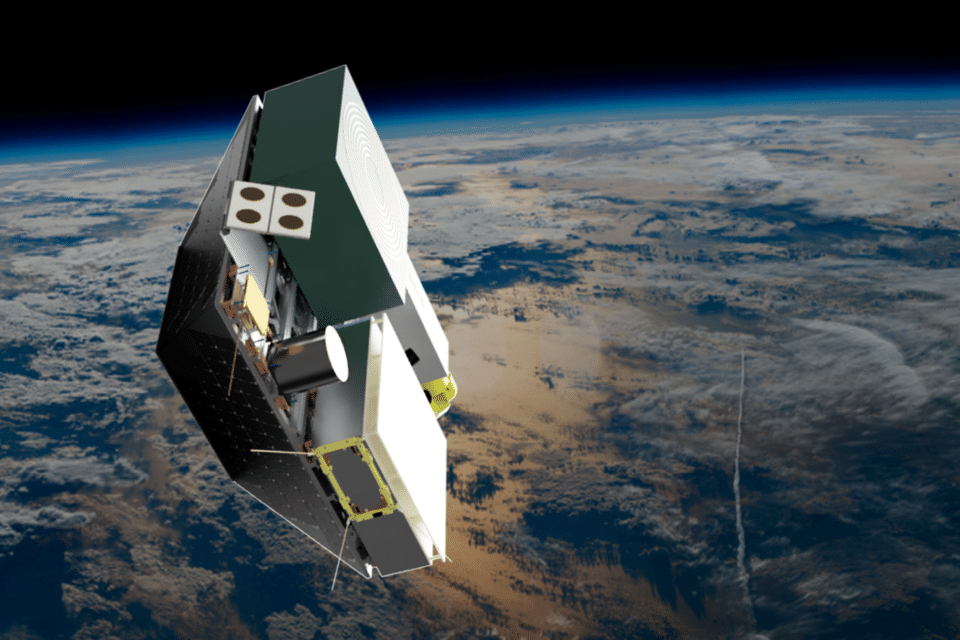
The British-built satellite Titania has successfully been launched into orbit, offering the Armed Forces enhanced surveillance capabilities in space. This development coincides with new trials of advanced ground sensors designed to track movements and identify potential threats in the space domain.
Titania is a key component of a substantial investment exceeding £3 billion aimed at bolstering the UK’s presence in space and safeguarding satellites that are essential to everyday life.
Enhancing Military Coordination
The successful launch of Titania, which took place last month, marks a significant advancement for the Armed Forces, enhancing their operational coordination both on the ground and in the air. The satellite improves the military’s capacity to monitor activities on Earth from space.
As the second satellite in the UK’s expanding military constellation, Titania follows the successful deployment of Tyche in October. It will be managed by UK Space Command as part of the ISTARI programme.
Weighing approximately 100 kilograms—similar to the size of a washing machine—Titania orbits the Earth every ninety minutes at a speed of 27,000 kilometres per hour.
Project Inaros and Advancements in Space Monitoring
The launch of Titania aligns with the Ministry of Defence’s (MOD) initiation of Project Inaros, which trials an advanced network of sensors intended to monitor space from three locations around the globe.
Wes Streeting MP, Secretary of State for Defence, remarked, “The new space age is here. Space underpins everything from weather forecasts and financial transactions to sat-navs and mobile phone connections, and it is critical for our national security and military operations.” He further noted that with Titania now operational and Project Inaros enhancing satellite surveillance, threats can be detected more swiftly, thereby increasing the UK’s safety.
Both Titania and Inaros are products of British design and manufacture, supported by over £3 billion in investment in space capabilities, which fosters highly skilled employment across the UK and strengthens the nation’s industrial base.
Strategic Importance of Satellite Technology
Air Chief Marshal Sir Harv Smyth, Chief of the Air Staff, emphasised the significance of satellite observation for national resilience and military advantage. This capability will be showcased by Titania and Tyche, along with future satellites Juno and Oberon.
The MOD is committed to utilising cutting-edge technology worldwide, including Inaros sensors, to ensure the Armed Forces maintain a competitive edge wherever they operate.
Under the ISTARI programme, the MOD is advancing satellite technology and supporting ground systems to enhance space-based intelligence, surveillance, and reconnaissance, providing British personnel with a tactical advantage globally.
Collaboration and Future Developments
Titania was conceptualised and built in Hampshire through the collaborative efforts of the Defence Science and Technology Laboratory (Dstl) and BAE Systems, as part of a £9.5 million contract. Future satellites, including Juno, developed with SSTL, and Oberon, in partnership with Airbus Defence and Space, will follow.
Andrea Thompson, Managing Director of BAE Systems Digital Intelligence & Land, highlighted the programme’s demonstration of the UK’s sovereign space capabilities and its crucial role in national protection. The company remains dedicated to fostering advanced technologies that bolster national resilience and create skilled job opportunities throughout the UK.
Dr Paul Hollinshead, CEO of Dstl, acknowledged the pivotal role the organisation played in the development and successful launch of Titania, showcasing the expertise and commitment of the team involved. This achievement underscores the benefits of sustained investment in Defence Science and Technology for mission success.
Innovative Sensor Technology
Project Inaros will trial three ground-based neuromorphic sensors, designed by a British-Australian firm in collaboration with the National Security Strategic Investment Fund. These sensors will monitor space activities from locations in the UK, Australia, and British facilities on Cyprus.
This innovative technology, which emulates biological processes to detect changes in light, could serve as an early warning system for unusual or potentially dangerous activities near UK satellites. Data collected by Inaros will assist UK Space Command units, including No. 1 Space Operations Squadron, No. 2 Space Warning Squadron, and the newly formed No. 3 Space Effects Squadron, in protecting critical UK satellites that support navigation, communications, and missile threat warnings.
The initiatives surrounding Titania and Inaros respond to the recognition in the Strategic Defence Review that space is increasingly crucial to the UK’s national security and everyday life. This work forms part of the £3 billion allocated by the Defence Investment Plan for space capabilities that aim to safeguard UK assets in orbit while reinforcing deterrence on Earth. The Defence Investment Plan has pledged a total of £298 billion in spending over the next four years.



More Stories
UK Highlights Key Human Rights Issues in Antigua and Barbuda During 53rd Universal Periodic Review
Latest HMRC Interest Rates Update: What You Need to Know
Minister Steps In to Preserve Iconic Edward the Black Prince Bust in the UK