
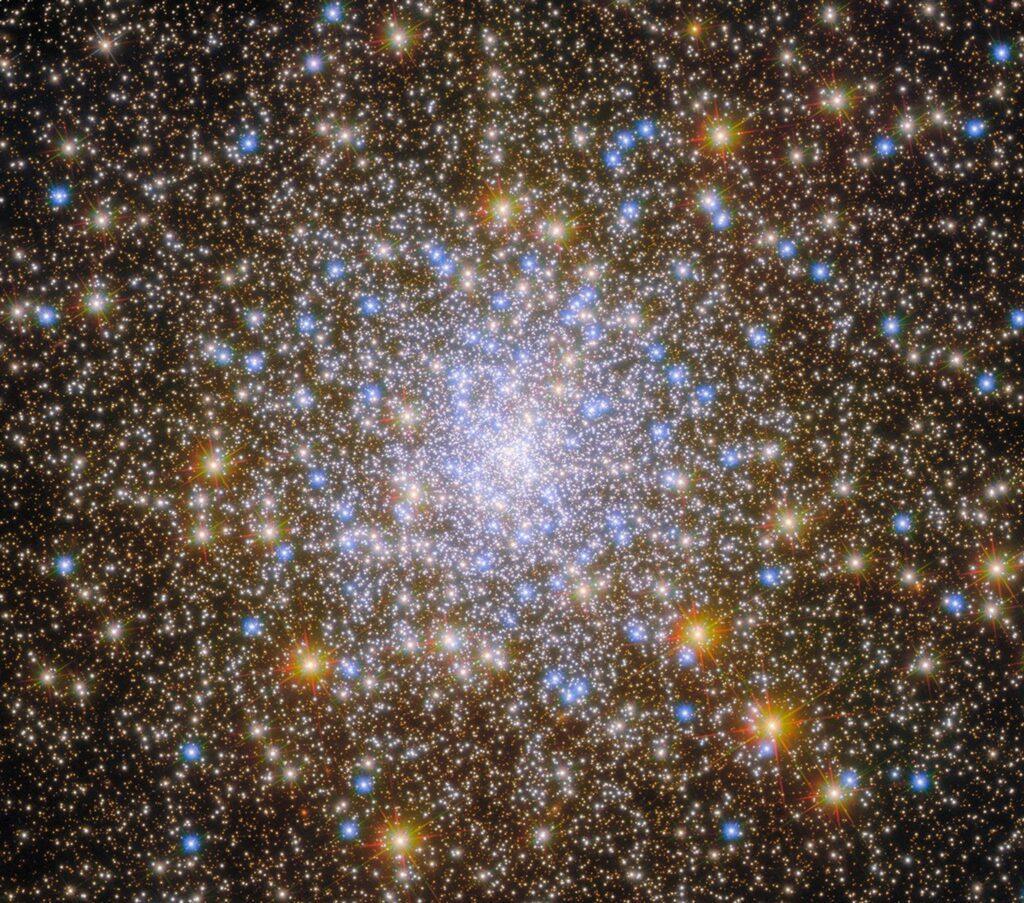
This image from the Hubble Space Telescope, released on 5th November 2026, offers valuable insights into galactic history. The stunning array of stars depicted is known as Messier 30 (M30), named in honour of the French astronomer Charles Messier, who catalogued this and other diffuse celestial objects that could easily be mistaken for comets during the early days of telescope observation. M30 is situated approximately 27,500 light-years away in the constellation of Capricornus.
Exploring the Significance of M30
The study of M30 allows scientists to glean important information about stellar evolution and the dynamics of star clusters. This collection of stars serves as a laboratory for understanding how stars interact with one another and how they evolve over time. Observations of such clusters can reveal insights into the age, composition, and formation processes of stars, contributing to the broader understanding of the universe.
Further Research on Star Clusters
Research into M30 and similar star clusters continues to be a focus for astronomers, as they provide a unique opportunity to observe the life cycles of stars in a relatively controlled environment. By analysing the properties of the stars within M30, scientists can refine their models of stellar behaviour and the forces at play in these complex systems.



More Stories
Astronomy Picture of the Day: November 6, 2026 – A Tribute to the Swift Space Telescope
NASA Astronauts Engage with Florida Students in Live Q&A Session
Illuminating the Heart of the Midwest: A Glimpse into the Vibrant City Lights