
Characteristics of a Unique Dwarf Galaxy
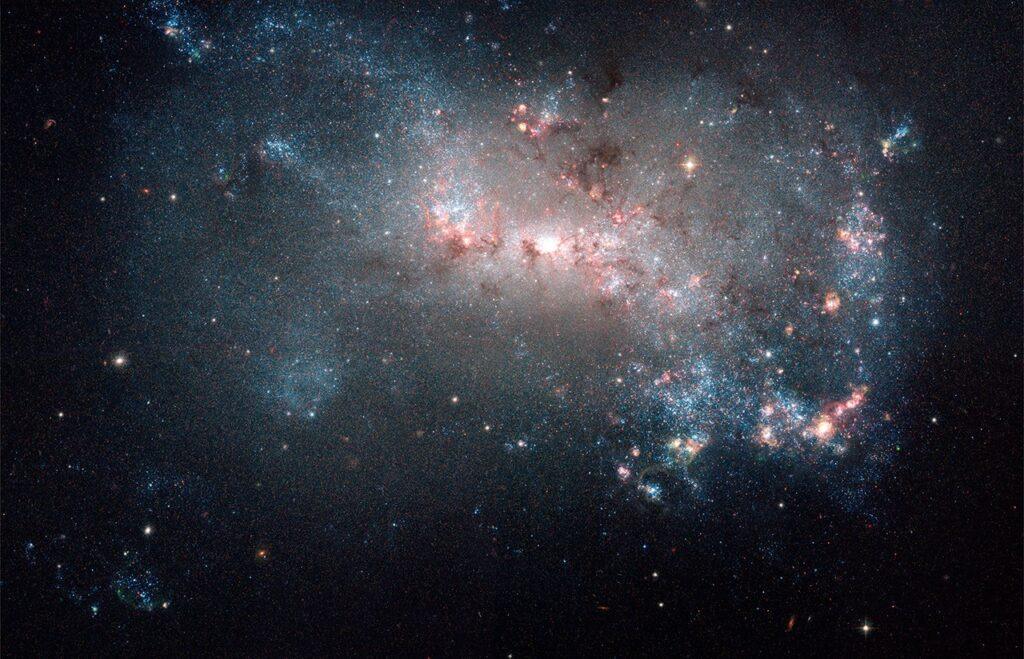
A peculiar dwarf galaxy, characterised by its clumpy and irregular cloud-like structure, exhibits a roughly rectangular form. This galaxy is adorned with small, bright blue points of light interspersed with larger patches of light pink. Additionally, areas of dark brown and milky white are smudged throughout its centre, creating a striking visual contrast. Against a predominantly black backdrop, the galaxy is lightly sprinkled with tiny white, blue, and red stars, as well as distant galaxies, enhancing its ethereal appearance.
Significance of Oxygen in Dwarf Galaxies
Recent investigations by a prominent space observatory have focused on 37 nearby dwarf galaxies, revealing a surprising deficiency in the expected levels of oxygen. This discovery poses intriguing questions regarding the formation and evolution of these galaxies, as oxygen is a critical element in understanding stellar processes and the chemical enrichment of the universe. The findings suggest that our current models of galaxy formation may need to be reevaluated to account for the missing oxygen.
Implications for Astrophysics
The implications of this research extend beyond the immediate findings, as it challenges existing theories in astrophysics regarding the lifecycle of stars and the processes that contribute to the chemical composition of galaxies. The study highlights the importance of continuous exploration and observation in the field of astrophysics, particularly in understanding the complex dynamics of dwarf galaxies and their role in the broader context of the universe.



More Stories
Explore November’s Night Sky: Your Guide to Celestial Wonders and Shorter Days
Discover the Stunning Colours of the Moon: APOD for 1st November 2026
NASA Investigates Commercial Opportunities for Hubble Telescope Servicing