
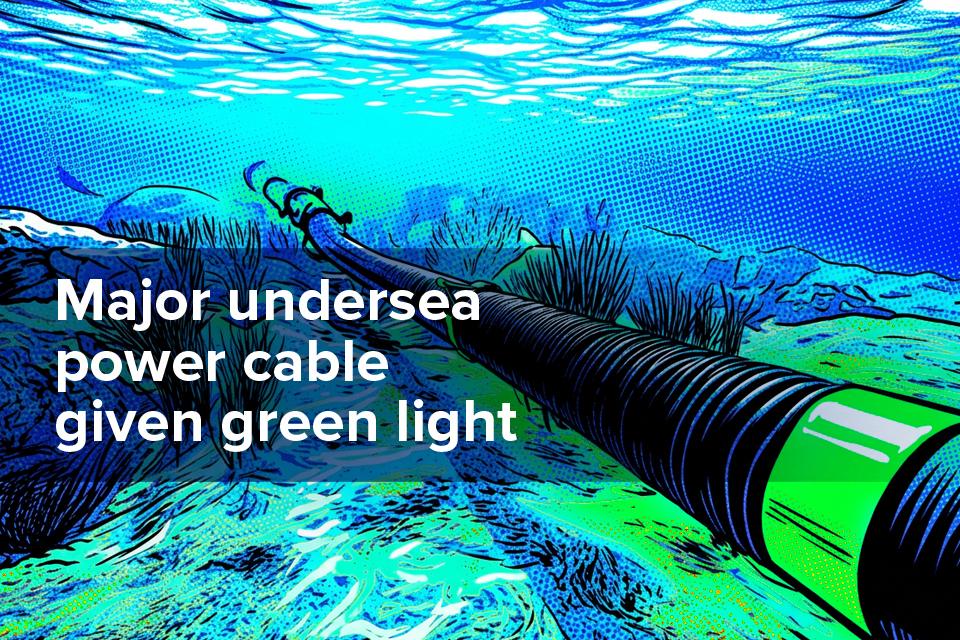
Families and businesses in the UK stand to benefit from an increase in clean, homegrown energy following the recent government approval of Sea Link, a significant undersea power connection between Suffolk and Kent. This ambitious project, developed by National Grid, will have the capacity to transmit 2 GW of electricity, sufficient to power approximately 2 million homes, thereby facilitating the efficient transfer of power from generation sites to consumers.
By alleviating pressure on the existing electricity grid, Sea Link aims to reduce instances where generators are compensated to curtail production due to network limitations. This enhancement of infrastructure is expected to bolster the resilience of Britain’s energy supply, mitigate energy waste, and ultimately lower costs for consumers.
Community Benefits and Investment
The initiative incorporates a community benefits scheme, which will see National Grid allocate over £1 million to community funds in both Kent and Suffolk. These funds could be directed towards local priorities, including the enhancement of community facilities, the improvement of green spaces, and the development of local skills.
This approval aligns with the Prime Minister’s introduction of the Great British Grid, a publicly owned entity under Great British Energy, which aims to streamline public and private investments to accelerate necessary upgrades to the energy network. Additionally, the government is advancing reforms to empower developers and businesses to construct their own grid connections where suitable, thus minimizing delays and costs while fostering growth.
Strengthening Energy Security
Energy Minister Michael Shanks emphasised the importance of revitalising the national grid to facilitate the connection of renewable energy sources and businesses, which is vital for driving economic growth and reducing reliance on fluctuating global fossil fuel markets that contribute to rising bills.
Shanks stated, “By rewiring Britain, we get homegrown power to where it’s needed, ensure the grid is resilient for the future, and bring bills down for good.” This initiative follows the recent approval of two major solar farms in Nottinghamshire and Cheshire, thereby reinforcing the commitment to enhancing homegrown energy production and the infrastructure necessary for its distribution.
New Solar Projects on the Horizon
The Great North Road Solar and Biodiversity Park in Nottinghamshire is set to feature a generating capacity of 800 MW, enough to power around 400,000 homes annually, as projected by its developer. This project is poised to become one of the largest solar farms in the UK, sharing that distinction with the Springwell Solar Farm, which received approval earlier this year.
In an innovative approach, nearly 4,000 sheep are expected to graze beneath and around the solar panels, with that number potentially increasing to 9,000 during lambing season. This sustainable practice will help manage grass growth while allowing agricultural activities to continue alongside electricity generation.
Additionally, the Frodsham Solar project in Cheshire plans to integrate solar panels with battery storage, enabling the retention and utilisation of electricity generated when demand peaks. This dual approach promises to enhance energy efficiency in the region.
Growing Clean Energy Initiatives
With the recent decisions, the government has now approved a total of 39 nationally significant clean energy projects since July 2024. Sea Link, a 2 GW electricity transmission connection primarily positioned offshore between Suffolk and Kent, is a vital component of this initiative.
Element Green, the developer behind the Great North Road project, anticipates that it will provide sufficient clean, affordable energy to meet the needs of approximately 400,000 homes. Their plans also include the planting of 64,500 new trees, the creation of over 50 km of hedgerows, and the establishment of 34.8 km of new walking and riding routes, further contributing to community and environmental well-being.
Meanwhile, the developer of the Frodsham project asserts that it could generate enough electricity to power 40,000 homes, reinforcing the commitment to sustainable energy solutions in the UK.




More Stories
London Unites Against Knife Crime: Launch of ‘No Place for Knives’ Campaign in High-Risk Areas
Celebrating 10 Years of ‘See it. Say it. Sorted.’ – A Decade of Enhancing Safety on Britain’s Railways
Welsh Rugby Union Commits to Supporting Armed Forces Community