

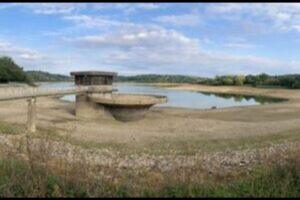
Reservoir levels across much of England have fallen to notably or exceptionally low levels following a particularly dry month, prompting the government to collaborate with water companies to safeguard supplies. Traditionally, the Environment Agency anticipates that by this time of year, overall reservoir storage in England would be nearly three-quarters (74.3%) full. However, due to the ongoing drought, most reservoirs are currently less than half full, with alarming figures reported for Ardingly in West Sussex and Wimbleball in Somerset, which are at 23% and 21% capacity, respectively.
Government Prioritises Water Resource Management
Recent statistics were released amidst declarations from Prime Minister Andy Burnham and Environment Secretary Dame Angela Eagle, both emphasising the critical importance of water resources for the Government. The current drought has highlighted the necessity for a public interest approach in managing essential resources like water.
In response, the government has convened weekly meetings of the National Drought Group to coordinate efforts across the water sector. Additionally, a comprehensive reform of the industry is underway through an enhanced Water Bill, with further details expected in the months ahead regarding the Government’s water management plans.
The Environment Agency continues to monitor the actions of water companies closely, ensuring adherence to their statutory drought strategies aimed at conserving supplies and supporting communities. Enhanced monitoring and increased scrutiny of abstractors are part of this effort, alongside expedited processing of drought permit applications to allow water companies to modify the volume of water released into local rivers. This approach aims to better protect public water supplies while also considering the needs of local wildlife and the environment.
Measures to Conserve Water Supplies
South East Water is poised to submit an application to the Government for a non-essential use ban (NEUB) that would allocate more water for household use, thereby averting the need for further restrictions. Water Minister Emma Hardy remarked on the necessity for fundamental reform within the water sector, citing the considerable strain on water resources due to an exceptionally dry spring and successive summer heatwaves. She underscored that any further disruption to customer supplies would be intolerable and urged water companies to take immediate action to conserve remaining resources, promptly address leaks, and implement contingency plans for the weeks ahead.
Hardy also highlighted the forthcoming Water Bill, which aims to initiate a transformative decade-long journey for the water system, including plans for nine new major reservoirs to secure future supplies. Across the country, rainfall has remained below average for six months this year, with September averaging just 65% of typical precipitation. The east and south-east regions recorded the lowest rainfall levels at 52% and 57%, respectively, while central England saw 59% and the south-west 69%.
Addressing Drought and Environmental Concerns
Despite cooler temperatures leading to a slight reduction in water demand, usage remains higher than expected for this time of year, further straining reservoir levels and public supplies. The Environment Agency has warned that without significant interventions, such as NEUBs, reservoir storage is likely to continue its decline throughout the remainder of the year. The agency estimates that soils remain extremely dry, necessitating an extraordinary 120% of average rainfall over the next seven months to alleviate drought conditions by the following spring.
While the El Niño phenomenon is anticipated to increase the risk of a wet and stormy autumn in the UK, drought pressures are likely to persist in certain areas. The impacts of climate change are manifesting as an increase in both droughts and flooding, sometimes occurring simultaneously.
Support for Agriculture Amid Drought
During the latest National Drought Group meeting, the Environment Agency announced important changes to abstraction licensing intended to assist farmers. Following a £65 million funding boost announced by Mr Burnham over the summer, the first adjustment permits farmers to begin filling their water storage reservoirs immediately, rather than waiting until November 1st, thereby ensuring preparedness for ongoing drought conditions. However, this change will not apply to river catchments designated as principal salmon rivers or those subject to specific restrictions to protect fish stocks.
The second change simplifies the process for farmers seeking long-term abstraction licences. Philip Duffy, Chief Executive of the Environment Agency, emphasised the need for careful water management in light of continued below-average rainfall, reinforcing that the drought is far from over. The government and regulators are closely working with the water industry to manage reserves effectively while also supporting agricultural resilience and environmental protection.
Investment and Future Planning for Water Security
Additional measures include a £65 million package aimed at assisting farmers affected by drought, which encompasses funding of up to £15 million for building on-farm reservoirs to enhance water storage capabilities. An investment of £100 million is also being directed towards strengthening the nation’s response capacity to extreme weather and wildfires.
The ongoing efforts of water companies to bolster resilience involve plans for nine new reservoirs by 2050, alongside the development of desalination plants and multiple water transfer schemes to secure future supplies. Furthermore, changes in the Planning and Infrastructure Act are being implemented to facilitate non-water sector companies in constructing reservoirs, categorising them as nationally significant infrastructure projects to expedite approval processes.
Work is also advancing on mandatory water efficiency labelling, with Defra expected to respond soon to a consultation concerning improved water efficiency in new homes. Additionally, the focus on nature-based solutions continues, including initiatives to restore peatlands, create wetlands, and increase tree planting to mitigate flooding and enhance water retention during drought periods.
The National Drought Group, which comprises representatives from the Met Office, government, regulators, water companies, farmers, Canal & River Trust, anglers, and conservation experts, convenes weekly to monitor the situation and coordinate actions as part of an increased incident response strategy. The Environment Agency is currently processing 10 Drought Permit applications, including one recently granted to South East Water to support operations at Ardingly Reservoir. Members of the National Drought Group are actively endorsing the Let’s Save Water campaign, reinforcing the collective commitment to responsible water management.



More Stories
G7 Leaders Urge Strong Action for Global Energy Security and Market Stability
UK Pledges Unwavering Commitment to Universal Rights at UN Third Committee Meeting
Tough Measures Introduced to Regulate Chemicals Used in the Production of Hazardous Weapons