
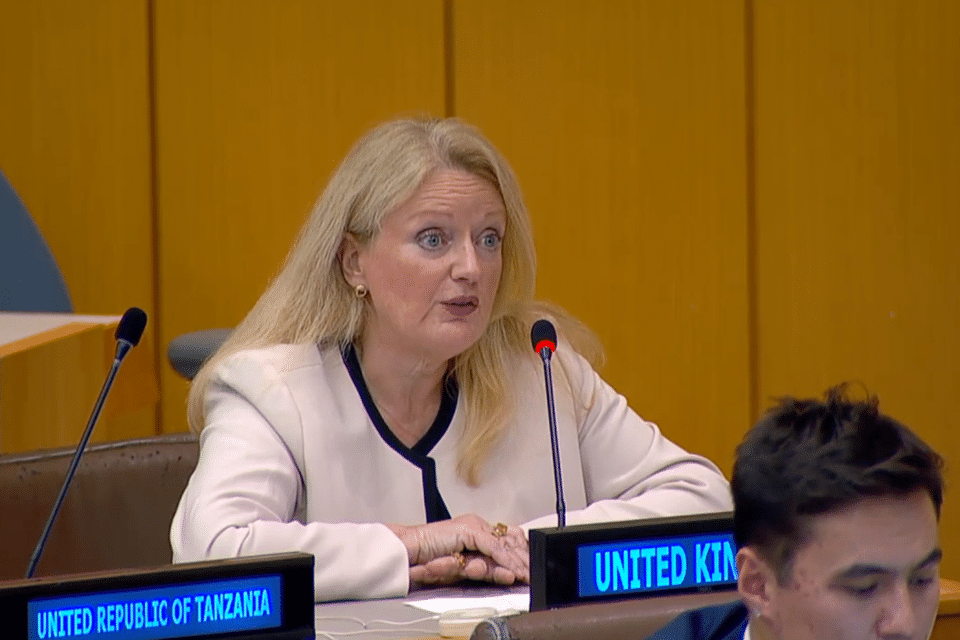
Across the globe, individuals are being stripped of their fundamental human rights amid conflict, oppression, discrimination, and the abuse of power and technology. The principles upheld by this Committee are not merely theoretical; they serve to protect human dignity, foster peaceful and inclusive societies, and prevent instability and conflict.
In the face of escalating pressures on human rights and the multilateral system, it is imperative that we transform our collective commitments into tangible changes that benefit people everywhere. Unfortunately, the landscape of human rights is increasingly perilous. Attacks on women, girls, and members of the LGBT+ community, coupled with a diminishing civic space, are exacerbating the consequences of conflict and authoritarian repression. Our response must centre on human rights and the rule of law.
Urgent Humanitarian Needs in Gaza
In Gaza, basic humanitarian needs remain unmet, and it is crucial for all parties involved to uphold international law, protect civilians, and ensure rapid and unhindered access for humanitarian aid. We unequivocally condemn the abuses perpetrated by Hamas and other non-state actors. It is essential that Hamas relinquishes its weapons and dismantles its terror infrastructure, having no role in the future governance of Gaza. We support the full implementation of the 20-Point Plan and remain dedicated to fostering a credible political process towards a two-state solution.
In the West Bank, ongoing settlement expansion, settler violence, and the displacement of residents undermine the prospect of achieving a two-state solution. The UK has recently taken action to address this pressing issue, including imposing restrictions on settlement activities and those who support, facilitate, or profit from them. We urge all parties to adhere to international law, safeguard civilians, and facilitate humanitarian access.
Consequences of the Conflict in Ukraine
In Ukraine, five years into Russia’s full-scale invasion, the human cost continues to escalate. The independent monitoring and investigative mechanisms established by the United Nations are vital for accountability. Russian forces have targeted civilian infrastructure, tortured detainees and prisoners of war, and unlawfully deported and militarised Ukrainian children. It is essential that Russia is held accountable, and that Ukraine’s sovereignty, independence, and territorial integrity are maintained.
In Sudan, civilians are facing atrocity crimes, conflict-related sexual violence, displacement, and hunger. The illegal flow of weapons and external support is perpetuating this conflict. All nations must cease their support for the warring factions, respect international humanitarian law, and leverage their influence to protect civilians, secure humanitarian access, and halt the violence. The UN Fact-Finding Mission must continue its critical work to preserve evidence and lay the groundwork for accountability.
Challenges in South Sudan and Myanmar
In South Sudan, renewed political tensions, attacks on civilians, forced recruitment, sexual violence, and restrictions on political freedoms threaten stability and increase the risk of a return to broader conflict. Leaders must exercise restraint, engage in genuine and inclusive dialogue, and uphold the commitments of the peace agreement.
In Myanmar, we denounce human rights violations and abuses, particularly those perpetrated by the military, including airstrikes on schools, hospitals, and places of worship. We remain committed to supporting efforts to gather and preserve evidence to ensure that those responsible are held accountable.
Progress and Accountability in Syria
In Syria, we acknowledge the steps taken by the government towards a political transition, including the convening of a new Parliament, and the initiatives aimed at ensuring accountability and transitional justice for both past Assad-era crimes and recent instances of sectarian violence. We continue to encourage the Syrian Government to pursue an inclusive and representative political settlement that safeguards the rights of all Syrians and holds accountable those responsible for human rights abuses.
This is crucial for the long-term stability and prosperity of the Syrian populace. In Afghanistan, the Taliban’s decrees systematically exclude women and girls from education, work, and public life, while restricting access to justice and entrenching discrimination against religious and ethnic minorities. These policies are indefensible and must be reversed.
Violence and Repression in Iran and China
In Iran, thousands of peaceful protesters were killed by security forces in January, with many subsequently executed and others remaining on death row. Reports of torture and mistreatment, particularly of women, ethnic minorities, and religious communities, are deeply troubling. Iran must cease its violent suppression of dissent, impose a moratorium on executions, and cooperate with UN accountability mechanisms.
Apart from conflicts, governments are increasingly utilising technology, legal frameworks, and state power to silence dissent. In China, ongoing evidence of violations in Xinjiang and Tibet is alarming. The Ethnic Unity Law threatens to entrench restrictions on the rights and freedoms of ethnic minorities. China should implement the recommendations from the 2022 assessment, release those arbitrarily detained, address reports of forced labour, and grant meaningful independent access to Tibet.
Protecting Human Rights Defenders
In Hong Kong, recent convictions illustrate how the National Security Law is being wielded to curtail political expression. Earlier this year, Jimmy Lai was sentenced to 20 years in prison; we call for his immediate release. Mr President, in these contexts and beyond, civil society and human rights defenders transform commitments into real change. However, they often face intimidation, reprisals, and transnational repression for collaborating with the United Nations. The United Kingdom categorically condemns such retaliation.
We take pride in supporting the Lighthouse Fund, which provides protection for human rights defenders under threat. Our commitment to defending the rights of women and girls globally persists, encompassing efforts to combat all forms of violence against them and to promote comprehensive sexual and reproductive health and rights. We will advocate for women’s economic empowerment and their full, equal, and meaningful participation in public life and decision-making processes regarding peace and security.
Universal Rights for All Individuals
Human rights are universal and apply equally to every individual, including those who identify as lesbian, gay, bisexual, transgender, and other members of the LGBT+ community. No one should suffer violence, criminalisation, or exclusion based on their identity, the people they love, or how they express themselves. In this moment of strain on the UN human rights system, our response should not be to lower our ambitions but rather to focus the system on where it can provide unique value: through independent scrutiny, credible evidence, accountability, and protection for those whose voices have been silenced.
The United Kingdom will listen, act, and collaborate with partners across all regions. We will defend universal rights without fear or favour, for safeguarding human dignity is the most certain path to creating a safer and fairer world.



More Stories
England’s Reservoirs Face Drought Pressure Following Six Consecutive Months of Dry Weather in 2026
G7 Leaders Urge Strong Action for Global Energy Security and Market Stability
Tough Measures Introduced to Regulate Chemicals Used in the Production of Hazardous Weapons