
Every day, enthusiasts of the cosmos are invited to explore our universe through a captivating image or photograph featured as the Astronomy Picture of the Day. Each visual is accompanied by a concise explanation crafted by a professional astronomer, providing insight into the wonders of the night sky.
The Fascinating Shrimp Nebula
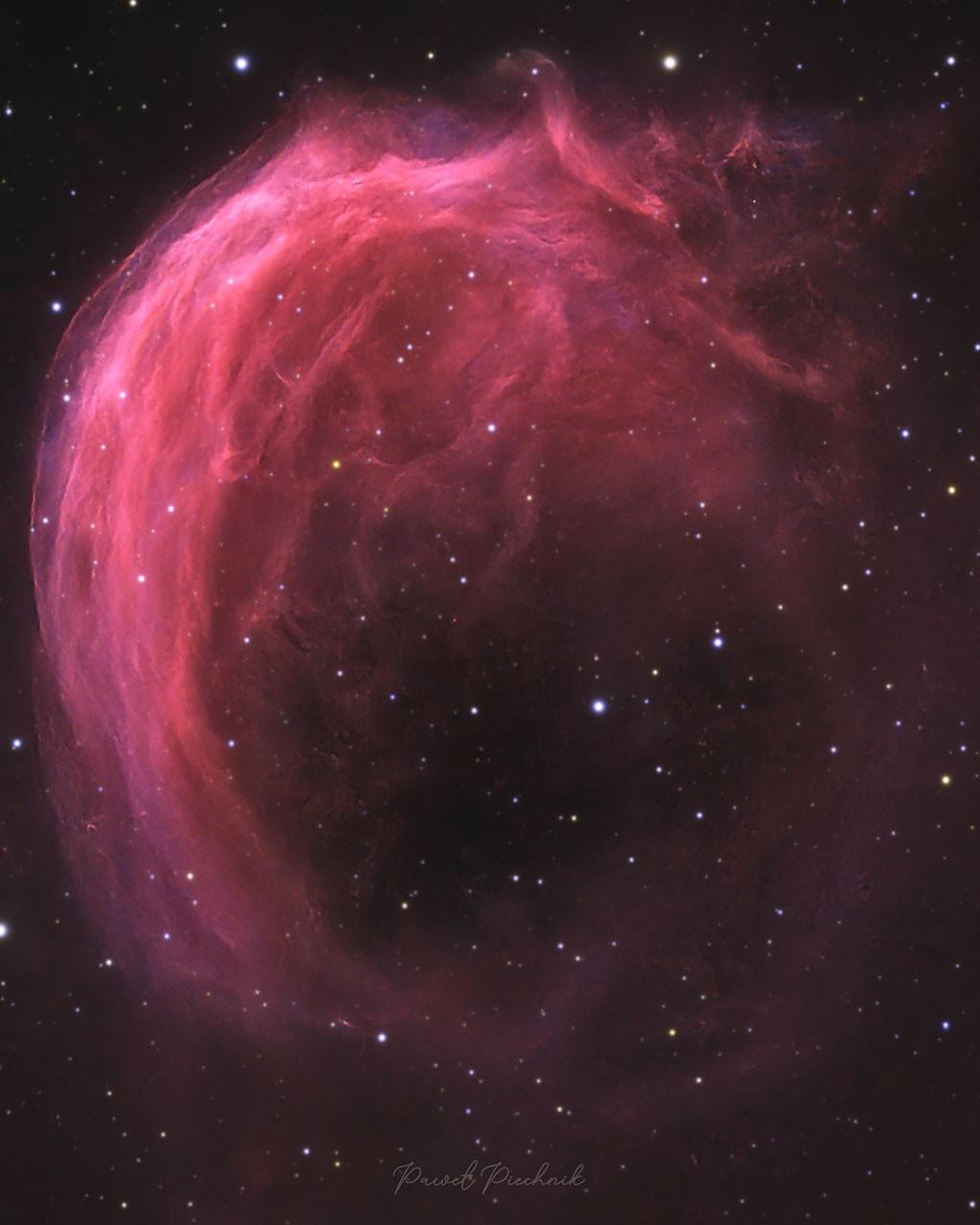
One of the most intriguing celestial objects is Sh2-188, commonly known as the Shrimp Nebula. This planetary nebula, notable for its impressive angular size, approximately spans half the diameter of the Moon. The swirling patterns observed within the Shrimp Nebula are believed to be influenced by its high velocity. At the heart of this nebula lies a white dwarf core, the remnant of a Sun-like star that has shed its outer layers. This core is travelling at an extraordinary speed through interstellar space, generating a bow shock that resembles the wake created by a boat moving through water. This phenomenon is particularly visible on the upper left side of the image.
Although the Shrimp Nebula may appear faint, it emits a glow as it compresses and brightens the gas on its leading edge. The stunning image showcased today was captured using a backyard telescope in Krakow, Poland. It depicts the nebula in the light of hydrogen, sulfur, and oxygen, and has been digitally enhanced to reflect the nebula’s true colours accurately.
Updates and Future Images
For those interested in contributing their own astronomical images, the email address for submissions to the Astronomy Picture of the Day has recently changed. Further details can be found on the APOD Submissions page. Additionally, the main website for APOD has moved from its previous location to science.nasa.gov/apod, making it easier for enthusiasts to access daily images and information.
Looking ahead, tomorrow’s featured image will delve into the concept of open space, continuing the tradition of providing captivating glimpses into the vastness of our universe.
Image Credits and Contributors
The striking image of the Shrimp Nebula is credited to Pawel Piechnik. The article has been authored and edited by a team of experts, including Robert Nemiroff, Jerry Bonnell, Cecilia Chirenti, and Keighley Rockcliffe. This initiative is supported by the Astrophysics Science Division at NASA’s Goddard Space Flight Center, in collaboration with NASA Science Activation and Michigan Technological University.
In the previous day’s feature, titled “Cosmic Latte,” viewers explored the average colour of the universe, showcasing the diverse palette of cosmic phenomena that our universe has to offer.



More Stories
NASA Celebrates Milestone: Artemis Accords Now Boasts Over 75 Signatories
Exploring the Secret Valleys Beneath Greenland’s Ice Cap
San Marino Joins the Artemis Accords: A New Era for Space Exploration with NASA