
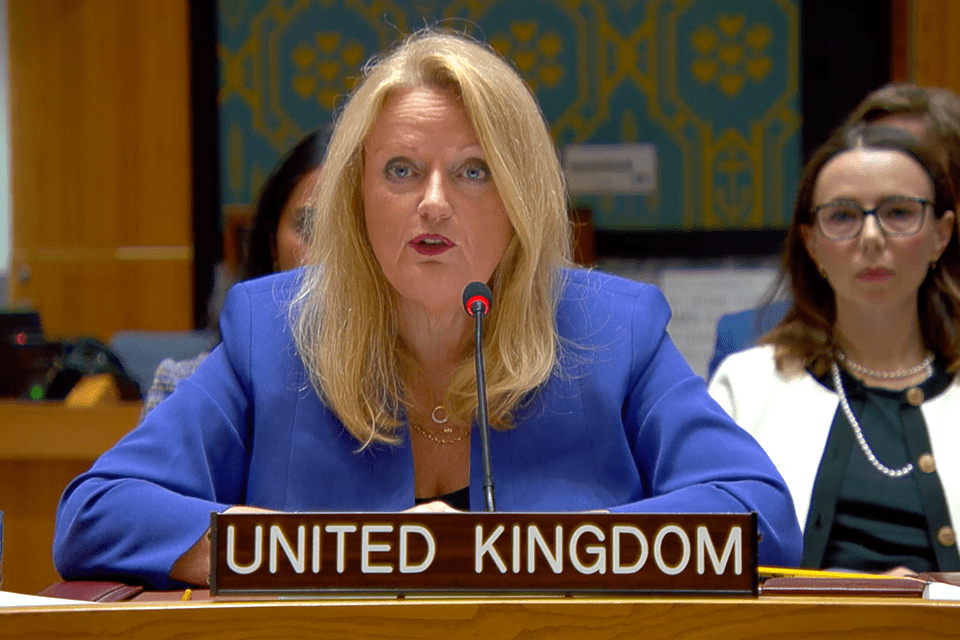
Ongoing Concerns Surrounding Iran’s Nuclear Programme
For over two decades, Iran’s nuclear and missile initiatives have posed significant challenges to the international community. The United Kingdom has consistently emphasised the importance of pursuing a diplomatic resolution through negotiation and dialogue.
In 2006, the Security Council unanimously adopted resolution 1737, a pivotal measure aimed at addressing the potential threat. This resolution imposed sanctions that prohibited the transfer of nuclear technology and materials, alongside asset freezes targeting individuals associated with Iran’s enrichment activities.
By 2015, the Security Council endorsed the Joint Comprehensive Plan of Action (JCPOA), which allowed for the relief of comprehensive economic and financial sanctions contingent upon Iran’s commitments to restrict its nuclear programme.
Regrettably, Iran opted for a trajectory of nuclear escalation, expanding its programme in ways that provide no credible justification for civilian use. This includes the accumulation of over 400kg of uranium enriched to 60%, a level of enrichment that only Iran, as a non-nuclear weapon state, has pursued.
Iran’s Non-Compliance and the Snapback Mechanism
In August 2025, the United Kingdom, France, and Germany informed the Security Council of Iran’s clear and deliberate non-compliance with the JCPOA. The following month, the Council initiated the snapback process, reinstating UN sanctions.
One year later, Iran has repeatedly called upon other Member States to uphold the UN Charter while failing to honour its own obligations and disregarding the authority of the Security Council.
Three key points must be emphasised. Firstly, the UN Charter mandates the full implementation of all sanctions resolutions, including the arms embargo. The six Security Council resolutions passed over the past two decades are crucial in curbing Iran’s dangerous proliferation, safeguarding international security, and reinforcing the global non-proliferation framework. All Member States, including Iran, are obligated to adhere to these Chapter 7 resolutions without exception.
It is imperative that the 1737 Committee fulfil its mandate. We urge the prompt appointment of a Committee Chair and members for the Panel of Experts, and we advocate for support regarding the upcoming renewal of the Panel’s mandate.
IAEA Engagement and Obligations
Secondly, Iran is currently failing to meet the obligations set forth in its comprehensive safeguards agreement with the International Atomic Energy Agency (IAEA), in accordance with its commitments under the Non-Proliferation Treaty (NPT). The IAEA Director-General’s report highlights Iran’s lack of engagement, indicating a deterioration in its cooperation.
Since June 2025, Iran has not permitted IAEA inspectors access, with the sole exception of the Bushehr Power Plant. In the lead-up to its latest report, the IAEA was denied access to any of Iran’s nuclear facilities, hindering its ability to verify the status of these sites and the associated nuclear materials, including Iran’s uranium stockpile.
Director-General Grossi has labelled this situation as a proliferation concern that requires urgent attention. Furthermore, Iran’s failure to implement its IAEA additional protocol since 2021 has compounded these issues. In June 2025, the IAEA’s board of governors determined that Iran was non-compliant with its comprehensive safeguards agreement obligations. Despite repeated calls for Iran to return to compliance, little progress has been made.
The Path Forward: Diplomacy and Cooperation
Finally, Iran now stands at a crossroads and has the opportunity to choose the path of diplomacy. To address the longstanding concerns of the international community regarding its nuclear programme, Iran should return to negotiations, engage fully with the IAEA, and restore transparency regarding its nuclear activities and safeguards obligations.
The United Kingdom is prepared to respond positively to credible and verifiable progress in this area. A negotiated settlement represents the only sustainable long-term solution to the threat posed by Iran’s nuclear programme. We remain steadfast in our commitment to achieving a durable diplomatic resolution that guarantees Iran will never develop or acquire a nuclear weapon.

More Stories
Welfare System Reforms Expected to Generate £1.9 Billion in Savings by 2030/31
Neil Sachdev’s Tenure as Chair of HM Land Registry Extended: What It Means for the Future
UK Delivers Key Statement on Ukraine at IAEA Board of Governors Meeting – September 2026