
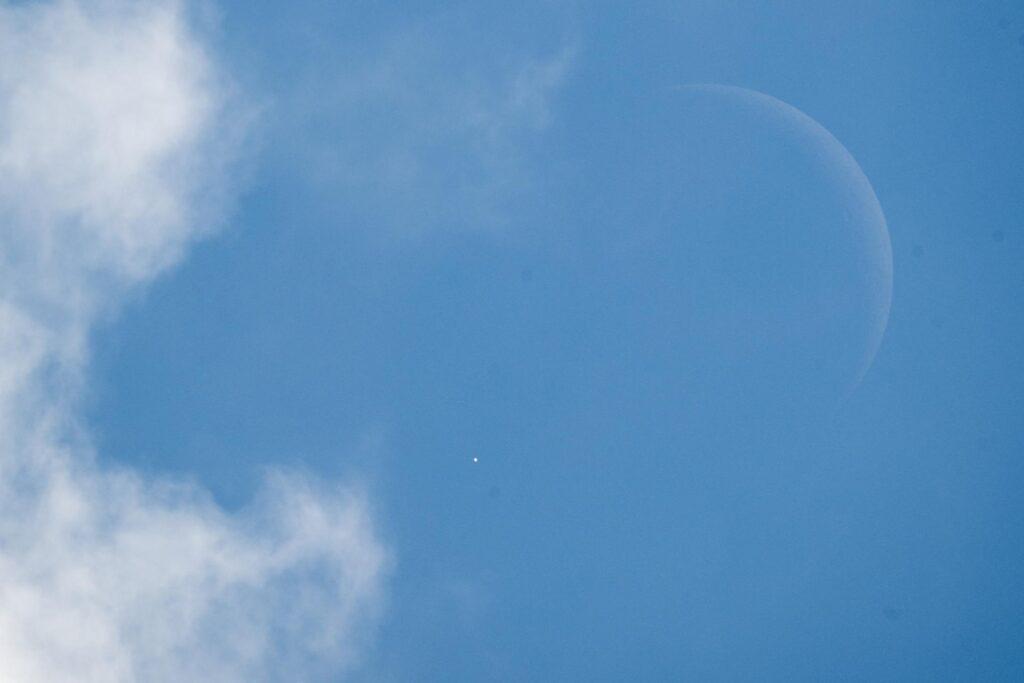
On Wednesday, June 17, skywatchers across the United States and parts of Canada were treated to a remarkable phenomenon: a daytime lunar occultation of Venus. This celestial event occurs when the Moon aligns directly in front of another astronomical object, in this case, Venus, momentarily obscuring it from view.
A Unique Celestial Alignment
During this particular occurrence, the Moon passed in front of Venus, marking the first of three planned occultations for the year. For those fortunate enough to witness this event, the sight of Venus vanishing behind the lunar disc created a captivating spectacle against the backdrop of daylight.
For those who may have missed this event, there is still hope, as two additional opportunities to observe Venus’s disappearance behind the Moon are scheduled for later in 2026. The next occultation will take place on September 14, with visibility extending across parts of Asia, Africa, Europe, and western Russia. Following that, a third and final opportunity will occur on November 7, primarily observable from southern South America.
Anticipation for Upcoming Occultations
The excitement surrounding these celestial events is palpable, as each occultation offers a unique chance to engage with the cosmos in a way that few experiences can match. Astronomers and enthusiasts alike eagerly await the upcoming dates, hoping to catch another glimpse of this enchanting interaction between the Moon and Venus.
As we look forward to these future events, the anticipation builds within the astronomical community and among casual stargazers. Each occultation serves as a reminder of the intricate dance of celestial bodies and their ability to inspire awe and wonder here on Earth.




More Stories
NASA Shares Exciting Developments on Lunar Base Rover Progress
Curiosity Rover Update: Observing Stunning Cloud Dynamics Over Sols 5036-5042
Discover the Unusual X-ray Hot Radio Source: Treble Clef – APOD for 19th October 2026