
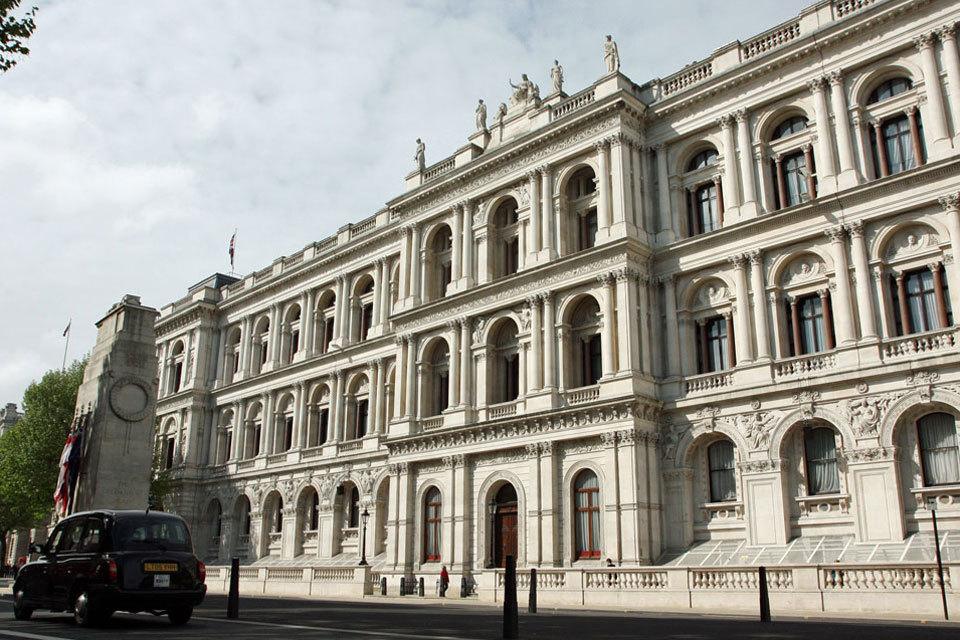
On 11 November, Ministers and senior representatives from the Ministries of Foreign Affairs of Denmark, Estonia, Finland, Iceland, Latvia, Lithuania, Norway, Sweden, and the United Kingdom convened aboard the aircraft carrier HMS Prince of Wales during the Atlantic Future Forum in Oslo.
The UK Minister, Lord Wood, presided over a roundtable discussion with Nordic-Baltic allies focused on actionable measures to enhance support for Ukraine, safeguard maritime interests, foster European collaboration, and bolster collective economic resilience. The Ministers reaffirmed the significance of strengthening UK-NB8 cooperation in safeguarding the security and prosperity of Europe.
Support for Ukraine Amidst Ongoing Conflict
The Ministers reiterated their steadfast support for Ukraine, designating the immediate priority as aiding the nation in enduring another winter marked by assaults from the Russian state. They pledged to collaborate in fortifying Ukraine’s air defences, protecting critical energy infrastructure, and addressing its most pressing defence requirements.
Discussions highlighted the necessity for enhanced coordination between the UK and Nordic-Baltic nations, alongside a call for greater European accountability in matters of security, reinforcing both NATO and transatlantic ties. The Ministers acknowledged that the aggression exhibited by the Russian state necessitates a unified and robust European response through NATO and across the continent.
Commitment to sustained, long-term support for Ukraine was emphasised, noting that the security of Ukraine is intrinsically linked to the security of Europe. The Ministers also deliberated on recent diplomatic efforts aimed at achieving a just and lasting peace, grounded in international law, including the UN Charter, and stressing the importance of respecting Ukraine’s sovereignty and territorial integrity. It was agreed that Ukraine’s future must be determined by Ukraine itself, and that decisions concerning European security should involve European perspectives. The Ministers committed to remain closely aligned as diplomatic initiatives evolve, reiterating the necessity of holding Russia accountable for its actions. Without accountability for acts of aggression, a just and lasting peace remains unattainable.
Strategic Measures Against Russian Aggression
The Ministers concurred that increasing pressure on the Russian state and providing greater support to Ukraine, including financial assistance, is essential for compelling Russia to engage earnestly in negotiations. They pledged to collaborate on efforts to diminish Russian energy revenues, enhance sanctions enforcement, and disrupt financial and cryptocurrency networks that enable Russia’s ongoing conflict against Ukraine. Continued disruption of Russia’s shadow fleet and the vital revenues it generates for the state was identified as a priority, alongside a commitment to jointly tackle hybrid threats posed by Russia.
Enhancing Maritime Security and Cooperation
The Ministers recognised that the security of maritime routes connecting their nations is crucial to collective security and prosperity. They acknowledged that rising strategic competition and threats to critical infrastructure necessitate closer collaboration across the North Atlantic, Baltic Sea, and High North regions.
Emphasising the importance of secure maritime communication lines for Allied reinforcement and resupply, they highlighted the need to maintain security, stability, and predictability in the High North. The role of NATO in collective defence, particularly within the maritime domain, was reaffirmed, with an agreement that enhanced UK-NB8 maritime cooperation should complement NATO’s efforts and build upon existing partnerships, including through the Joint Expeditionary Force (JEF).
Ministers committed to strengthening maritime domain awareness by improving monitoring, accelerating information-sharing, and enhancing coordination in threat assessments. They also agreed to deepen cooperation in safeguarding critical underwater infrastructure, exploring a unified response to subsea maritime security incidents, and ensuring rapid recovery and repair following disruptions.
Regional Developments and International Law
Discussions included the security implications of the increasing cooperation between Russia and China, along with developments in maritime activities in the Arctic. The Ministers reaffirmed their commitment to international law, including the United Nations Convention on the Law of the Sea (UNCLOS), which provides the legal framework governing activities in oceans and seas. They expressed concerns regarding Russia’s shadow fleet, which poses significant maritime and environmental risks due to its unsafe practices and illegal activities.
Strengthening UK-EU Relations and Economic Security
The Ministers welcomed the strengthening of the UK-EU relationship, particularly in terms of security and defence partnerships, recognising that enhanced cooperation will contribute to a safer, stronger, and more prosperous Europe, complementing NATO and broader European efforts. They acknowledged the unique role of UK-NB8 cooperation in uniting EU and non-EU partners to address shared European challenges and looked forward to the upcoming UK-EU Summit on 20 November as an opportunity for further collaboration.
Reinforcing the importance of inclusive European security and defence cooperation, which involves non-EU allies and strengthens NATO, was a central theme of the discussions.
Addressing Geoeconomic Challenges
The Ministers agreed on the urgent need to bolster economic security, noting that geopolitical dynamics are increasingly influencing economic relations. They committed to closer collaboration in scaling defence industry ecosystems, reducing strategic dependencies, enhancing the resilience of supply chains through diversification, and protecting the technologies, research, and infrastructure vital for security and economic stability. They affirmed that efforts to enhance economic security should continue to promote open, rules-based trade and investment among trusted partners.
Solidarity and coordinated action in response to economic security crises were emphasised, along with a commitment to strengthen collective capacities to deter economic coercion. The importance of secure and resilient energy systems and infrastructures for European security and preparedness was also highlighted.
In conclusion, the Ministers resolved to maintain the momentum of UK-NB8 cooperation, transforming shared priorities into actionable measures. Through collaborative efforts on Ukraine, maritime security, European cooperation, and economic security, the UK and Nordic-Baltic countries aim to enhance the security and prosperity of their region and Europe as a whole.


More Stories
PM Holds Key Meeting with Dutch Prime Minister Jetten on 21 November 2026
UK’s Ambitious NATO Space Launch Initiative Aims for the Stars
UK Condemns Damage to Diplomatic Premises Amid Russian Assaults on Ukraine: Key OSCE Statement