
The Royal Navy is set to enhance NATO defences and contribute to economic growth in the UK through a new commitment to acquire three mine-hunting motherships. This initiative is part of a significant agreement with Norway, aimed at bolstering both UK and European security.
The first of these Offshore Support Vessels is scheduled for delivery in 2031 as the UK joins Norway’s extensive naval programme. This deal is integral to the Type 26 export agreement with Norway, which is expected to sustain approximately 4,000 jobs throughout the UK supply chain, including more than 2,000 positions at BAE Systems’ shipyards in Glasgow.
These new vessels will serve as motherships for uncrewed mine-hunting systems, thereby enhancing the safety, speed, and effectiveness of sea mine detection and disposal. An additional investment of £90 million has been allocated in the Defence Investment Plan to facilitate this acquisition.
Strengthening Defence Partnerships
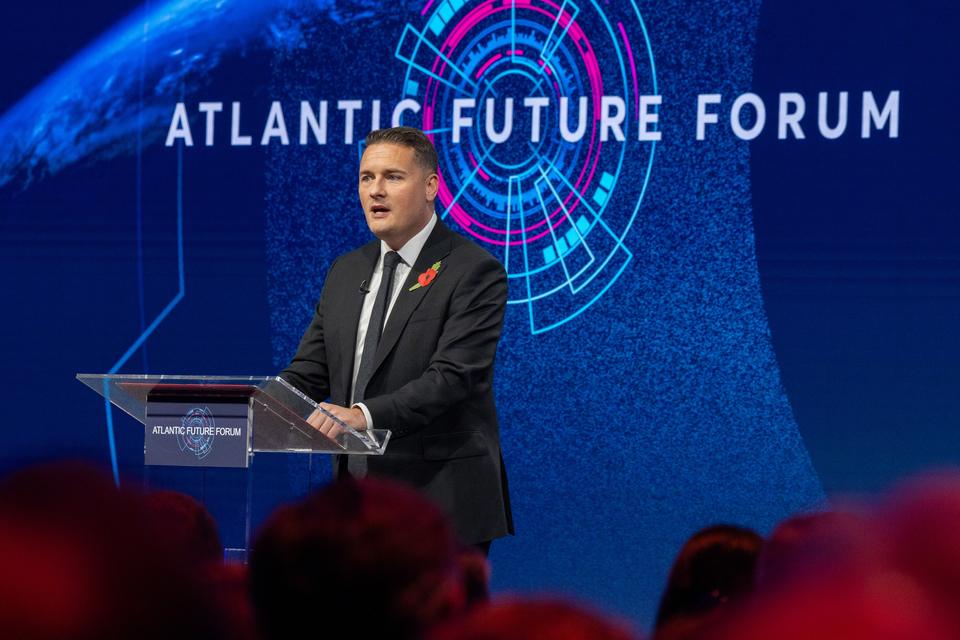
Defence Secretary Wes Streeting and his Norwegian counterpart, Tore O. Sandvik, reaffirmed the UK’s commitment to this programme during the Atlantic Future Forum in Oslo. This agreement signifies a pivotal step in the defence partnership between the UK and Norway, aimed at addressing common security challenges.
The vessels will play a crucial role in the development of the Hybrid Navy and are essential for modernising the Royal Navy’s mine-hunting capabilities. By deploying these ships, sailors will operate from a safer distance, thereby enhancing anti-submarine warfare operations along NATO’s northern flank.
Wes Streeting stated, “This deal strengthens our ability to protect freedom of navigation, which is critical to our security and our economy. By leveraging the largest sustained increase in defence spending since the Cold War, we are equipping our sailors with the latest technology, ensuring their safety while protecting our shores.”
Addressing Maritime Threats
The first Offshore Support Vessel, referred to as a “standardised vessel” in Norway, will be delivered in 2031, with an option for the UK to procure an additional three vessels. The urgency of addressing the threat posed by sea mines has been underscored by recent incidents, including Iran’s illegal mining activities in the Strait of Hormuz, which have significantly disrupted global energy trade.
The acquisition of these versatile Offshore Support Vessels will position the UK at the forefront of efforts to safeguard international navigation against evolving mine threats. This initiative will see the UK participate in Norway’s P1118 Standardised Vessel Programme, further solidifying the strategic partnership between the two nations.
Enhancing Interoperability and Cooperation
Norwegian Defence Minister Tore O. Sandvik expressed that the UK’s procurement of Norwegian Standardised Vessels will enhance the strategic partnership, as established in the Lunna House agreement. The operation of similar platforms will improve navy-to-navy cooperation, enabling both nations to work seamlessly together in protecting NATO’s northern flank.
In conjunction with Norway’s £10 billion procurement of Type 26 frigates due in December 2025, the new agreement will ensure that both navies operate compatible vessels, significantly enhancing interoperability between these close NATO allies.
The Offshore Support Vessels will be delivered through the Maritime Capability Partnership Framework (MCPF), a government-to-government initiative between the UK and Norway. This announcement was made at the Atlantic Future Forum in Oslo, where additional maritime and industrial commitments were also discussed. Notably, Arondite has pledged a £35 million investment over five years to establish an office in Oslo and expand its European operations.
Furthermore, the Ministry of Defence and the Royal Navy have awarded a £90 million contract to Ocean Infinity for the Atlantic Net project, which will integrate autonomous and uncrewed systems with advanced sensors to identify and monitor underwater threats across the North Atlantic. These discussions took place during the International Sea Power Conference (ISPC), convened by the First Sea Lord, General Sir Gwyn Jenkins.



More Stories
PM Holds Key Meeting with Dutch Prime Minister Jetten on 21 November 2026
UK’s Ambitious NATO Space Launch Initiative Aims for the Stars
UK Condemns Damage to Diplomatic Premises Amid Russian Assaults on Ukraine: Key OSCE Statement